 language
 5 Signs Your German Course Is a Waste of Money
20+ students per class. Stuck at B1 for months. Teacher speaks English. No exam prep. No accreditation. If this sounds familiar, you're paying for nothing.
selina-kaya March 27, 2026
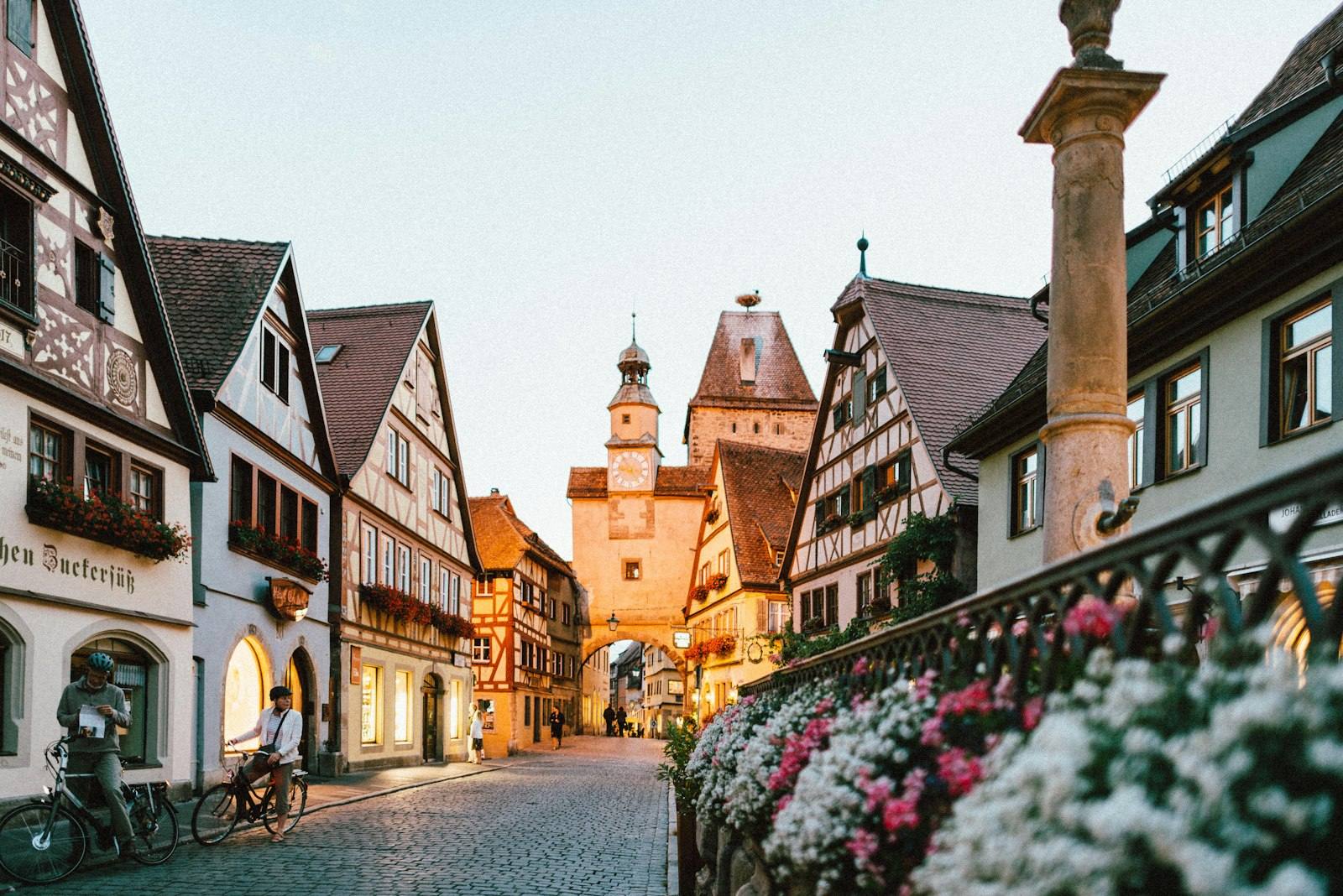
Frankfurt am Main is Germany’s financial capital — and one of the best cities for a German course if your goal involves a career in banking or finance. The Goethe-Institut Frankfurt offers an intensive course of 75 lessons from €1,149 for 3 weeks, private language schools start at €320/month, and specialized Business German programs cost €800–1,500/month. A shared apartment room costs €550–800/month, the Deutschlandticket costs €63/month. Your total monthly costs sit around €1,400–1,800 — more expensive than Berlin, but cheaper than Munich, with unmatched access to Germany’s financial sector. This guide covers everything: schools, course types, neighborhoods, costs, and your first steps after arrival.
Frankfurt is not the most obvious choice for language students. But it’s one of the smartest.
Europe’s banking hub: The European Central Bank (ECB), Deutsche Bank, Commerzbank, and over 200 national and international banks are headquartered here. If your goal is Business German for finance or banking, there is no better city. Many students come specifically to Frankfurt to learn financial vocabulary — and to look for internships or jobs on the spot.
Goethe University and research center: Frankfurt is home to the Johann Wolfgang Goethe-Universität with over 45,000 students, plus the Max Planck Institute and several research facilities. Students planning a degree in Germany will find short distances to testing centers and the university.
International community: About 30% of Frankfurt’s residents don’t hold a German passport. Expats from around the world live here — many from English-speaking countries, Japan, South Korea, and the Middle East. Even so, daily life runs in German: at the bakery, the registration office, on the tram. You’ll be challenged from day one.
Frankfurt Airport as entry point: Frankfurt Airport (FRA) is Europe’s largest cargo airport and one of its busiest passenger hubs. You can reach Frankfurt with direct flights from almost any country of origin — no stopovers through other cities. The S-Bahn connection gets you from the terminal to the city center in 11 minutes.
Price comparison with other cities: Munich charges €650–900 for a shared room, Berlin sits at €500–700. Frankfurt at €550–800 is pricier than Berlin but significantly cheaper than Munich — with comparable course offerings and much better access to the German financial sector.
Frankfurt doesn’t have as many schools as Berlin or Munich, but it offers a solid selection of private schools and the Goethe-Institut.
| School | Price | Format | Group size | Exams | Highlights |
|---|---|---|---|---|---|
| Goethe-Institut Frankfurt | from €1,149/3 weeks | 25 lessons/week | 8–16 | Goethe-Zertifikat, TestDaF | Traditional, globally recognized |
| Berlitz Frankfurt | €400–700/month | 20–25 lessons/week | 4–10 | telc | Business focus, small groups |
| BWS Germanlingua Frankfurt | €350–550/month | 20 lessons/week | 6–14 | telc, Goethe | Flexible entry |
| Sprachschule Aktiv Frankfurt | €320–480/month | 18–22 lessons/week | 8–15 | telc | Good value for money |
| DeutschAkademie Frankfurt | €360–520/month | 20 lessons/week | 5–12 | telc, TestDaF | Small groups, flexible starts |
| Inlingua Frankfurt | €380–650/month | 20–25 lessons/week | max. 10 | telc | Business focus |
| VHS Frankfurt | €90–200/month | varies | 15–25 | telc, DTZ | Most affordable |
| BAMF integration course | €2.29/lesson | 20 lessons/week | up to 25 | DTZ | For eligible residents |
The Goethe-Institut Frankfurt is located at Bleichstraße 1 in the city center, near the Hauptwache metro station. It offers courses from A1 to C2, Goethe-Zertifikat exams, and TestDaF.
Price overview:
| Course | Duration | Scope | Price |
|---|---|---|---|
| Deutsch Intensivkurs | 3 weeks (15 course days) | 75 lessons, 25 lessons/week | from €1,149 |
The course fee includes the placement test, teaching materials, the cultural and leisure programme, learning advice, access to the media library, and a 20% discount on exam fees. The Goethe-Institut’s course overview additionally lists €1,229 for the same 15 course days with 75 teaching hours in Frankfurt (as of September 2026).
The Goethe-Institut is particularly useful for people who need an internationally recognized certificate — for job applications at German companies abroad, naturalization processes, or university applications.
Here’s what a typical 4-month course stay at a mid-range school looks like:
| Item | Cost for 4 months |
|---|---|
| Course fees (DeutschAkademie Frankfurt, mid-range €440 x 4) | €1,760 |
| Books and materials | ~€60 |
| telc B2 exam | ~€150 |
| Total course costs | ~€1,970 |
Add monthly living costs of around €1,400–1,800, and 4 months in Frankfurt costs roughly €7,600–9,200 in total. For a career-focused course in Europe’s banking capital, that’s a competitive price.
Frankfurt offers all standard formats — plus some course types you won’t find anywhere else.
20–25 lessons/week, levels A1–C2. You advance one level in 4–6 weeks. This is the standard course for students on a language visa. Start on Mondays whenever possible — most schools only accept new students at the beginning of the week.
Business German courses are more unique in Frankfurt than in any other German city. You learn not just grammar but specifically:
Berlitz and Inlingua offer specialized Business German programs tailored to finance careers. Courses cost €800–1,500/month, but you get very small groups (4–8 people), practice-oriented materials, and often direct contacts to companies in Frankfurt’s financial district.
The Goethe-Institut Frankfurt is an official exam center. Courses that prepare directly for Goethe exams (A1 to C2) are particularly useful for people who:
Berlitz and Inlingua offer compact formats: 10 lessons/day, 1–2 weeks intensive crash course. No long-term commitment, no visa needed. Suitable for working professionals who want to quickly refresh their German skills.
The Goethe-Institut Frankfurt is an official TestDaF center. If you need German for university admission, you can complete both the course and the exam in the same place. That saves travel time and stress.
Frankfurt is more expensive than Berlin, but it’s not the priciest city in Germany. If you know where to look, you can budget well.
| Course type | Cost |
|---|---|
| Private intensive course (20 lessons/week) | €320–550/month |
| Goethe-Institut intensive (75 lessons) | from €1,149/3 weeks |
| Business German (specialized) | €800–1,500/month |
| VHS German | €90–200/month |
| BAMF integration course | ~€137/month (€2.29 x 60 lessons) |
| Exam | Fee |
|---|---|
| Goethe-Zertifikat A1–C2 | €120–280 |
| TestDaF | €195 |
| telc Deutsch B1/B2 | €120–180 |
| DSH | €100–130 |
How long you need in Frankfurt depends on your starting level:
| From | To | Intensive course (20 lessons/week) | Duration |
|---|---|---|---|
| Zero | A1 | ~75 lessons | 1 month |
| A1 | B1 | ~450 lessons | 5–6 months |
| B1 | B2 | ~300 lessons | 3–4 months |
| B2 | C1 (TestDaF) | ~300 lessons | 3–4 months |
| A1 | C1 (complete) | ~1,050 lessons | 12–14 months |
Students targeting Business German at B2 level — starting from B1 — typically need 3–4 months intensive course plus 1–2 months Business German specialization.
Tip: Take a placement test before starting. Good schools offer it for free. It saves you weeks in a course that’s too easy for your level.
Where you live affects your budget, daily life, and how quickly you learn German.
| Neighborhood | Shared room/month | Character | German in daily life? | Distance to schools |
|---|---|---|---|---|
| Bockenheim | €550–750 | University area, young, lively | Yes | Good |
| Bornheim | €600–800 | Old buildings, cafés, family-friendly | Yes (a lot) | Good |
| Sachsenhausen | €650–850 | Apple wine district, old-town feel | Yes | Medium |
| Westend | €800–1,200 | Banking quarter, premium location | Yes | Very good |
| Nordend | €650–900 | Trendy, Gründerzeit architecture | Yes | Good |
| Höchst | €450–600 | Affordable, quieter | Yes (a lot) | Medium |
| Fechenheim | €400–550 | Simpler, more residential | Yes (a lot) | Low |
Bockenheim is Frankfurt’s student neighborhood. Goethe University is here, there are many shared apartments, cafés, and bars. A shared room costs €550–750/month — affordable for Frankfurt. The tram takes you to the main station and city-center schools in 10–15 minutes. Plus: cheap food options, weekly markets, university library.
Bornheim is the most popular neighborhood for newcomers and expats. Beautiful old buildings, the lively Bornheimer Landstraße, good cafés and restaurants. Shared rooms cost €600–800/month. The U4 metro line connects you directly to the city center. German is the language of daily life here.
If you want to save money, look at Höchst (west) or Fechenheim (east). Shared rooms start at €400–600/month. The downside: 20–30 minutes commute to the center. But the RMV connections are reliable, and in both neighborhoods you’ll speak German from day one.
The Westend is the neighborhood of banks and law firms. Shared rooms cost €800–1,200/month — expensive, but you live at the heart of Frankfurt’s financial district. If you’re studying Business German and want to make contacts simultaneously, Westend is the most direct route.
With the Deutschlandticket you can travel for €63/month across all of Frankfurt and the entire Rhein-Main-Verkehrsverbund (RMV) — and beyond, on regional and local transport nationwide, just like in Berlin or Munich. That gets you to Wiesbaden, Darmstadt, and the whole region without an extra ticket. The RMV’s own monthly ticket (from €86) only makes sense in special cases, for example if you want a 1st-class upgrade.
Tip: Start your apartment search on WG-Gesucht.de at least 4–6 weeks before arrival. Write your application in German — even a short A2 text shows commitment. In Bockenheim and Höchst you’ll get more responses than in Sachsenhausen.
Frankfurt is more expensive than Berlin but not unaffordable. Here’s what language students actually spend each month.
| Category | Budget | Mid-range | Comfortable |
|---|---|---|---|
| Shared room | €550 | €700 | €900 |
| Language course | €320 | €450 | €700 |
| Deutschlandticket | €63 | €63 | €63 |
| Health insurance | €26 | €35 | €50 |
| Groceries | €200 | €260 | €320 |
| Phone | €10 | €15 | €20 |
| Other | €120 | €170 | €250 |
| Total | ~€1,289 | ~€1,693 | ~€2,303 |
The insurance figures are planning estimates: premiums for private travel and expat health insurance vary by provider, age, and level of coverage.
Groceries: Aldi, Lidl, and Netto are in every neighborhood. The Kleinmarkthalle at Liebfrauenberg offers fresh produce at fair prices. Turkish and Southeast Asian supermarkets in Bockenheim and Nordend are affordable.
Eating out: A kebab costs €5–8, a lunch special at a simple restaurant €9–13. Restaurants in the Westend are much more expensive. In Bockenheim and Bornheim you get good food at student prices.
Health insurance: You need private travel health insurance for your visa. Premiums depend on provider, age, and level of coverage; plans including dental care are noticeably more expensive. Get several quotes before booking instead of budgeting a fixed figure.
For a comparison with all German cities, check our cost comparison page.
If you come from a country outside the EU/EEA and want to stay longer than 90 days, you need the language course visa.
The visa requires:
The complete visa guide with all documents is in our language course visa article. Information on the Sperrkonto is in the blocked account guide.
Frankfurt’s immigration office is at Rebstöcker Straße 52, 60326 Frankfurt. Book appointments online through the Frankfurt city portal. Current wait times are 4–8 weeks — book as early as possible once you’re registered in Frankfurt.
Registration steps:
Information on the Chancenkarte for skilled workers is available on our dedicated page.
The Goethe-Institut Frankfurt at Bleichstraße 1 is Frankfurt’s most reputable language school. Founded in 1951, it offers courses from A1 to C2 and is one of the few schools in Frankfurt that administers both Goethe-Zertifikat and TestDaF exams on site.
Target audience: International language students seeking a globally recognized certificate — for university, work, or naturalization.
Highlights:
Rating: 4.5/5 (150 reviews)
| Exam | Where in Frankfurt | Levels | Purpose | Fee |
|---|---|---|---|---|
| Goethe-Zertifikat | Goethe-Institut Frankfurt | A1–C2 | Internationally recognized | €120–280 |
| TestDaF | Goethe-Institut Frankfurt | B2–C1 | University admission | €195 |
| telc Deutsch | Berlitz, Inlingua, BWS | A1–C2 | Work, residence | €120–180 |
| DSH | Goethe University Frankfurt | B2–C2 | Direct university admission | €100–130 |
| DTZ | BAMF centers Frankfurt | A2–B1 | Integration course completion | Free (with course) |
For a detailed exam overview, see our TestDaF complete guide.
Berlitz Frankfurt and Inlingua Frankfurt are the best-known providers of Business German for finance. Courses cost €800–1,500/month but feature very small groups (4–8 people) and practice-oriented content. The Goethe-Institut also offers courses with professional German content, without Berlitz’s and Inlingua’s specific finance focus.
Yes — with restrictions. The language course visa (§ 16f AufenthG) allows up to 20 hours/week of work or internships. Many banks in Frankfurt offer paid internships for German-speaking candidates. The usual path: 3–4 months of Business German, then apply for a Werkstudent internship.
Tight — but not as extreme as Munich. Shared rooms cost €550–800 in the mid-range. Bockenheim and Bornheim have the most options for language students. Start searching on WG-Gesucht.de at least 5–6 weeks before arrival. A hostel or short-term rental for the first two weeks is recommended so you can search in person.
Frankfurt Hauptbahnhof is one of Germany’s busiest stations. S-Bahn, U-Bahn, and trams connect all neighborhoods to the station. From Bockenheim it takes 10 minutes, from Höchst 20–25 minutes. Almost all language schools are within a 15-minute walk of the main station or a metro stop.
EU/EEA citizens do not. Everyone else: courses up to 90 days are visa-free (if you come from a visa-exempt country). For courses over 90 days you need the language course visa § 16f AufenthG. More details in our visa guide.
September–November and March–May are the best months. The city is less crowded, courses start reliably, and the weather is pleasant. Avoid summer (June–August), when many bankers are on holiday and Business German courses have thinner enrollment. January and February are also good starting points with many new groups.
Frankfurt is the clear choice for careers in banking, insurance, and finance. The ECB, Deutsche Bank, and Commerzbank are headquartered here. Munich is better for IT, engineering, and automotive. If your goal is the financial sector, invest in Frankfurt — that’s where the contacts are made.
Yes. Frankfurt has many expat families with children looking for au pairs — especially families where both parents work in finance. Au pairs receive room and board plus pocket money (€280–400/month) and can take language courses in their free time. For the au pair visa you need a formal agreement with the host family. More on financial planning in the Sperrkonto guide.
Ready to find your language school in Frankfurt? Use our Frankfurt am Main school search to compare schools by course type, price, and business focus. For a full comparison of all German cities, visit our cost comparison page.
language 20+ students per class. Stuck at B1 for months. Teacher speaks English. No exam prep. No accreditation. If this sounds familiar, you're paying for nothing.
 germany
 Compare 10 German cities for language students: living costs (€660-1,200/month), course prices (€289-1,149), schools, immersion quality, and job markets.
 language-school
 Guide to Business German courses for professionals: course types (B2–C1), costs (€300–1,500/month), online vs. in-person, industry-specific programs, and how business German differs from general courses in 2026.
Compare by level, format, price and city – and start your search now.