 language
5 Signs Your German Course Is a Waste of Money
20+ students per class. Stuck at B1 for months. Teacher speaks English. No exam prep. No accreditation. If this sounds familiar, you're paying for nothing.
selina-kayaMarch 27, 2026
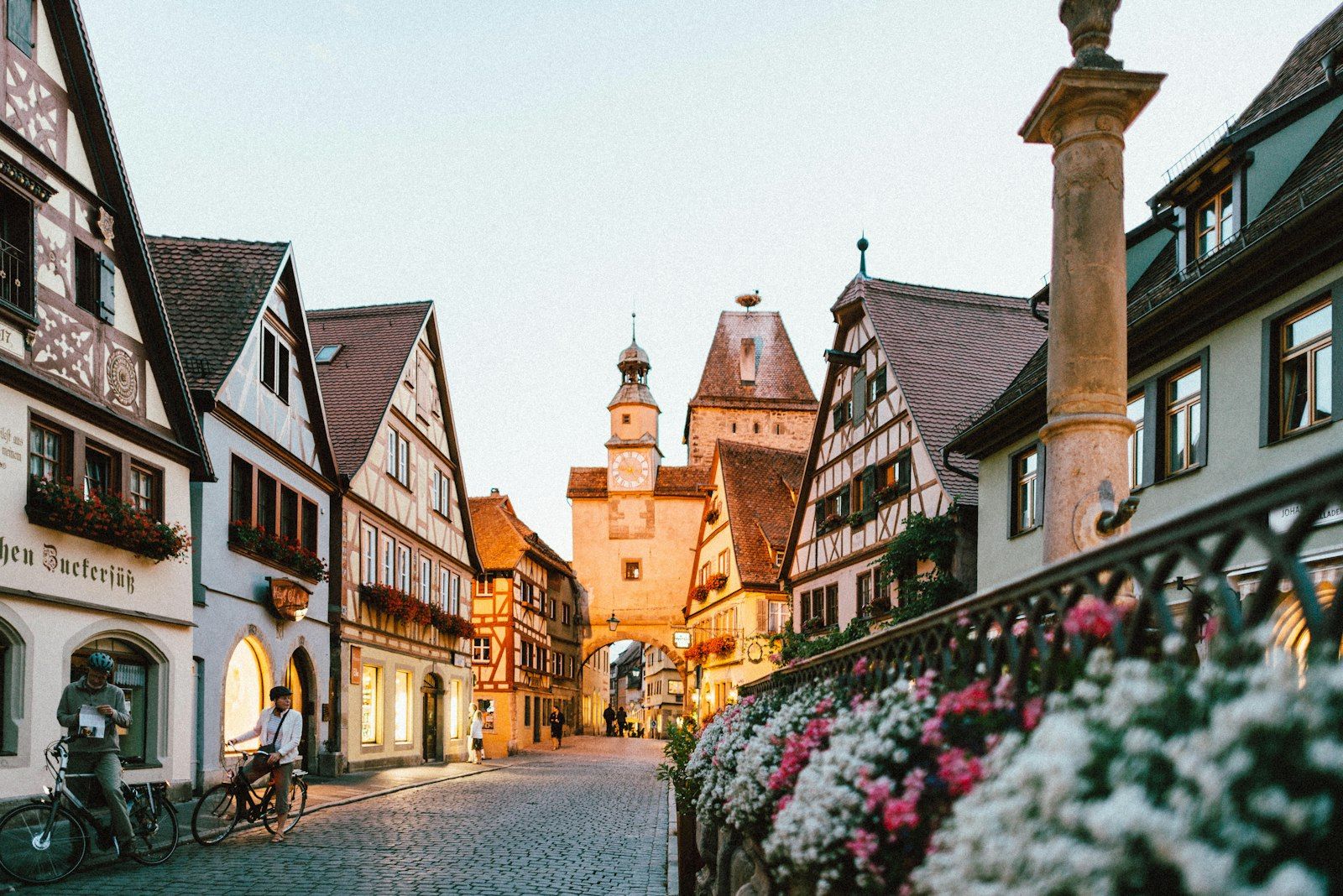
Leipzig costs €660 per month. München costs €1,200. Dortmund offers intensive courses from €289 for four weeks. Berlin has 40+ language schools but so much English that locals switch mid-conversation. These differences matter more than any ranking list.
This guide compares 10 German cities across living costs, course prices, school count, immersion quality, safety, and job prospects. Every number comes from 2025/2026 data. Use the tables to find the city that fits your budget and learning goals.
| City | Monthly Cost | WG Room | Intensive/4 wks | Schools | Immersion | Safety (crimes/100k) | Nightlife |
|---|---|---|---|---|---|---|---|
| Berlin | €950—1,050 | €618—650 | €318—700 | 40—50+ | Low | 14,252 | Top |
| München | €1,100—1,200 | €775—800 | €409—700 | 25—30 | Medium | 6,214 | Good |
| Hamburg | €950—1,020 | €620—649 | €400—700 | 15—20 | Medium | ~9,500 | Great |
| Köln | €900—970 | €600—610 | €400—650 | 12—15 | Good | 12,343 | Top |
| Frankfurt | €930—1,050 | €610—675 | €440—700 | 10—15 | Low | 14,600 | Good |
| Stuttgart | €870—930 | €540—560 | €379—600 | 8—12 | Good | 8,552 | Quiet |
| Düsseldorf | €900—960 | €580—600 | €409—500 | 8—10 | Medium | 12,172 | Good |
| Leipzig | €660—740 | €365—400 | €400—550 | 5—8 | Excellent | ~9,800 | Top |
| Dortmund | €680—750 | €380—425 | €289—590 | 5—8 | Excellent | 12,283 | Quiet |
| Essen | €680—740 | €386—415 | €280—600 | 3—5 | Excellent | ~10,500 | Quiet |
All cities include the €63/month Deutschland-Ticket for public transport. “WG Room” means a shared flat (Wohngemeinschaft) including utilities. Course prices are for group intensive courses (16—20 hours/week).
Your total monthly budget includes rent, food, transport, health insurance, and personal expenses. Course fees come on top.
| Rank | City | Total/Month | WG Room | Food | Transport |
|---|---|---|---|---|---|
| 1 | Leipzig | €660—740 | €365—400 | €170—210 | €63 |
| 2 | Essen | €680—740 | €386—415 | €170—200 | €63 |
| 3 | Dortmund | €680—750 | €380—425 | €170—200 | €63 |
| 4 | Stuttgart | €870—930 | €540—560 | €200—240 | €63 |
| 5 | Köln | €900—970 | €600—610 | €190—230 | €63 |
| 6 | Düsseldorf | €900—960 | €580—600 | €190—230 | €63 |
| 7 | Frankfurt | €930—1,050 | €610—675 | €200—250 | €63 |
| 8 | Berlin | €950—1,050 | €618—650 | €200—250 | €63 |
| 9 | Hamburg | €950—1,020 | €620—649 | €200—240 | €63 |
| 10 | München | €1,100—1,200 | €775—800 | €220—270 | €63 |
The gap between the cheapest and most expensive city is roughly €500/month. Over a six-month course, that adds up to €3,000. Choose Leipzig over München and you save enough to fund almost 11 months of intensive courses at Dortmund prices.
Berlin has more German language schools than any other city: 40 to 50+. Around 24% of all international language students in Germany choose Berlin. Providers include DeutschAkademie, the Goethe-Institut, die deutSCHule, GLS, Sprachenatelier, and TANDEM. You can find courses from €318/month at die deutSCHule to €739 for two weeks at the Goethe-Institut. DeutschAkademie charges €409 for a four-week intensive course.
The problem is English. In neighborhoods like Mitte, Kreuzberg, and Friedrichshain, waiters, shop owners, and even neighbors switch to English the moment they hear an accent. Many students report the same experience: “I start in German, and the Berliners answer in English.” In some parts of the city, you can live entirely in English without ever needing German.
Berlin’s startup scene is Germany’s largest, with over 111 startups and tech salaries averaging €58,000. The nightlife is legendary — clubs like Berghain and Tresor attract visitors from around the world. The city has 170+ museums, three opera houses, and a free museum Sunday every month.
Berlin works for you if you want maximum course choice, a huge international community (25% foreign-born, 190+ nationalities), and a city that never sleeps. It does not work if immersion is your priority. Budget: €950—1,050/month for living, plus course fees.
Key stats: 30+ universities, 200,000+ students (26% international), 14,252 crimes per 100,000 residents.
Browse schools in Berlin on our search page.
München is Germany’s safest large city at 6,214 crimes per 100,000 residents — less than half of Berlin’s rate. It also has the strongest job market. BMW, Siemens, Allianz, and Munich Re have their headquarters here. Tech salaries average €62,000. The automotive and IoT sectors are particularly strong.
You pay for that quality. A WG room costs €775—800/month — the most expensive on this list. Total living expenses reach €1,100—1,200/month. Course prices start around €409 at DeutschAkademie and go up to €739 for two weeks at the Goethe-Institut, which has its headquarters here. München has 25—30 language schools, including BWS Germanlingua, Sprachschule Aktiv, inlingua, and Carl Duisberg.
English is common in business settings, but less dominant than in Berlin. The Bavarian dialect (Bairisch) gives you an extra layer of exposure. Locals are proud of it, and hearing it in everyday life adds a dimension to your learning that you will not get elsewhere.
München fits students with a comfortable budget who want safety, world-class universities (TUM and LMU are both globally ranked), and direct access to industry jobs. The Englischer Garten is 3.7 km² — bigger than New York’s Central Park. Residents report 81% satisfaction with green spaces. And the Alps are an hour’s train ride south.
Key stats: 14 universities, 28% foreign-born, Oktoberfest and Biergarten culture, best safety record in Germany.
Hamburg offers big-city infrastructure with a calmer feel than Berlin. At €950—1,020/month, it costs roughly the same but feels less chaotic. The city has 15—20 language schools, including DeutschAkademie, DID Deutsch-Institut, Colón Language Center, evolanguage, TANDEM, and the Goethe-Institut.
As Germany’s second-largest city and Europe’s third-largest port, Hamburg has a maritime, international atmosphere. Media, logistics, and aviation (Airbus) create jobs for international workers. Media salaries average €56,000. The city aims for CO2 neutrality by 2040, which drives investment in green industries.
Residents rate Hamburg’s green spaces highest of all German cities at 82% satisfaction. The Elbphilharmonie is a world-class concert hall. The Reeperbahn and Schanzenviertel offer nightlife and culture without Berlin’s overwhelming scale. With 19 universities and 30,000+ international students, the city feels both cosmopolitan and manageable.
The weather is Hamburg’s one weak point. Maritime climate means rain, grey skies, and mild but damp winters. If you prefer sunshine, look south to Stuttgart or Frankfurt.
Key stats: 19 universities, 20% foreign-born, ~9,500 crimes per 100,000, 540+ km² of green spaces, Europe’s third-largest port.
Kölner have a reputation for being the friendliest people in Germany. That matters when you are learning a language. In Köln, strangers talk to you at Karneval, in Kölsch pubs (Brauhäuser), and on the Rhein promenade. The kölsche Lebensart (Cologne way of life) is built around sociability and openness.
The city has 12—15 language schools — DeutschAkademie, Berlitz, Tandem Köln, Carl Duisberg, and Sprachschule Aktiv among them. Living costs are €900—970/month. English is less dominant than in Berlin or Frankfurt, especially outside business districts. That gives you better natural immersion.
The Universität zu Köln has over 50,000 students. That makes Köln one of Germany’s most student-friendly cities. WDR, RTL, and many production companies have their headquarters here, making it Germany’s media capital. If you want a media career, Köln is a strong choice.
Karneval season gives you weeks of German practice in real-world settings. People celebrate in the streets, talk to everyone, and the whole city runs on social interaction. The nightlife density — bars and clubs per capita — ranks among the highest in Germany. The climate is mild and rheinisch, warmer than Hamburg or Berlin.
Key stats: 10 universities, 22% foreign-born, 12,343 crimes per 100,000, best city for social learners who want a Tandem partner fast.
Frankfurt has the highest foreign-born population of these 10 cities at 32%. Over 178 nationalities live here. Nearly 250,000 residents are foreign nationals. The European Central Bank, Deutsche Börse, and 300+ financial institutions make it Germany’s finance capital and continental Europe’s banking center.
Finance salaries average €66,529 — the highest of all cities in this comparison. If you plan a career in banking, insurance, or consulting, Frankfurt is the logical choice. More than 300 international financial institutions employ multilingual staff.
The downside: English dominates business life. Like Berlin, Frankfurt creates an English bubble that can block your immersion. And at 14,600 crimes per 100,000, Frankfurt has the highest crime rate on this list. Living costs run €930—1,050/month. Course prices start at €440 for four weeks. Schools include the Goethe-Institut, DID Deutsch-Institut, Sprachcaffe, and evolanguage.
The upside beyond finance: Frankfurt is compact and walkable. The Stadtwald is Germany’s largest inner-city forest. The Rhein-Main region gets more sunshine than anywhere else in this comparison. And the Museumsufer (museum bank) along the Main river holds a summer festival that is worth experiencing.
Key stats: 7 universities, 10—15 language schools, 10% of all international language students choose Frankfurt, warmest climate of all 10 cities.
Stuttgart is quieter than Berlin or Köln. It is also cheaper at €870—930/month. Mercedes-Benz and Porsche have their headquarters here. Bosch is nearby. If you want a career in automotive or engineering (average salary: €55,000), Stuttgart gives you direct access to Germany’s most important industry cluster.
The city has 8—12 language schools. DeutschAkademie offers courses from €379 for four weeks. iQ Lingua starts at €389. The Schwäbisch dialect adds character to daily life. Locals are proud of it and less likely to switch to English than Berliners. That helps your immersion.
Stuttgart sits in a valley (Kessel), which means warm summers and mild winters. Vineyards grow inside the city limits. The Mercedes-Benz Museum and Porsche Museum attract visitors worldwide, but the city itself stays calm. Mineralbäder (mineral baths) are a local tradition you will not find in other cities.
At 8,552 crimes per 100,000, Stuttgart is the second-safest city on this list. With 13 universities and 28% foreign-born residents, it has a strong international community without the English dominance of Berlin or Frankfurt.
Key stats: 13 universities, 28% foreign-born, 8,552 crimes per 100,000 (second safest), automotive engineering capital, good immersion quality.
Düsseldorf is Köln’s neighbor and rival. It offers a more polished, fashion-focused atmosphere. Living costs are €900—960/month. The city has 8—10 language schools, with courses from €409 at DeutschAkademie and €499 at Sprachschule Aktiv.
The city’s unique feature: Europe’s largest Japanese community. The Immermannstraße is known as “Little Tokyo,” with Japanese restaurants, shops, and cultural centers. Fashion, advertising, and telecommunications companies like Vodafone, Henkel, and L’Oréal Germany have offices here. The international fashion and advertising scene creates a cosmopolitan feel in a manageable city.
The Altstadt is called “the longest bar in the world” (längste Theke der Welt), with 260+ bars and pubs in one district. Karneval here rivals Köln’s, though Düsseldorfer would never admit it. Heinrich-Heine-Universität and the Kunstakademie Düsseldorf draw students and artists.
English is moderately common in business contexts but less so in daily life. The Rheinuferpromenade, Nordpark, and Hofgarten make the city green and walkable. The climate is mild and rheinisch, similar to Köln.
Key stats: 6 universities, 23% foreign-born, 12,172 crimes per 100,000, medium immersion quality, strong in fashion and advertising careers.
Leipzig is the standout recommendation for budget-conscious students who want real German immersion. At €660—740/month, it is the cheapest city on this list. A WG room costs just €365—400. In München, the same money covers half your rent.
English is far less common here than in western Germany. Only about 15% of the population is foreign-born. Locals speak German with you — at the bakery, at the Amt (government office), at parties. This is the single biggest advantage for language learning. Students confirm it: “The people actually speak German with you here.” No other large German city offers this level of natural immersion.
Leipzig has 5—8 language schools, including DeutschAkademie, Sprachschule Aktiv (€549/4 weeks), and the respected interDaF program at the Herder-Institut. The Universität Leipzig was founded in 1409. Bach, Mendelssohn, Wagner, and Schumann all worked here. The music heritage alone makes the city culturally rich.
The nickname “Hypezig” fits. Leipzig is one of Germany’s fastest-growing cities, with a booming arts, music, and startup scene. The nightlife on Karl-Liebknecht-Straße (Karli) rivals Berlin’s best. The Moritzbastei is Germany’s oldest student club. The Distillery is eastern Germany’s oldest techno club. Green spaces cover 896 hectares, with only 9% dissatisfaction — the best rating of any city here.
BMW and Porsche have factories in Leipzig. DHL runs a major logistics hub. The job market is growing, though salaries are lower than in western Germany.
Key stats: 5 universities, 15% foreign-born, ~9,800 crimes per 100,000, top-tier nightlife, outstanding green spaces.
Discover language courses in Leipzig through our school search.
Dortmund has the cheapest intensive courses of any major German city. Sprachschule Aktiv offers four-week intensive programs from just €289. Projekt Deutsch lernen charges €575 for 180 teaching hours plus 20 hours of tutoring — that is 200 hours of instruction for less than €3 per hour. Perfekt Deutsch runs courses at €589.
Living costs are €680—750/month. A WG room costs €380—425. The Ruhrgebiet (Ruhr area) atmosphere is down-to-earth and honest. Less glamour than Berlin, more authenticity. English is not widely spoken outside universities, which creates natural immersion.
TU Dortmund is strong in computer science and engineering. Around 53,000 students live in the city. Football fans know Signal Iduna Park — Germany’s largest stadium, home of Borussia Dortmund. The city is in the middle of a structural transformation. Heavy industry (ThyssenKrupp, Continental) is giving way to IT, logistics, and insurance. The Phoenix-See development shows what this transformation looks like: a former steel mill site turned into a modern lakeside neighborhood.
Dortmund will not win a beauty contest against München or Hamburg. But for a language student on a budget, the combination of €289 courses, €680/month living costs, and real German immersion is unbeatable.
Key stats: 3 universities, 53,000 students, 21% foreign-born, 12,283 crimes per 100,000, cheapest courses in Germany.
Essen is the smallest city on this list with only 3—5 private language schools. Options include IBZ Essen (€599 for 180 teaching units), KS++ Sprachschule, Berlitz, and L.A.N.E.S. But its VHS (Volkshochschule — community adult education center) charges just €2.30 per teaching unit. That makes it the second-cheapest VHS in all of Germany, after Duisburg (€1.80). For comparison, the most expensive VHS in Germany (Dresden) charges €7.10 per teaching unit.
Living costs match Dortmund at €680—740/month. The city was European Capital of Culture in 2010 and has reinvented itself from a coal and steel town to a green, modern city. Zeche Zollverein is a UNESCO World Heritage Site and a symbol of this transformation. Essen is officially the greenest large city in North Rhine-Westphalia, with Baldeneysee, Grugapark, and extensive forest areas.
RWE and E.ON have their headquarters here, making Essen Germany’s energy capital. ALDI Nord’s headquarters is also in the city. The Universität Duisburg-Essen is young and innovative.
English is rarely spoken in everyday life. With only 17% foreign-born residents, Essen gives you excellent immersion. The trade-off is fewer course options and a quieter social scene compared to Köln or Leipzig.
Key stats: 3 universities, 17% foreign-born, ~10,500 crimes per 100,000, UNESCO Zeche Zollverein, Germany’s energy capital.
| Your Goal | Best City | Why |
|---|---|---|
| Lowest budget | Leipzig | €660—740/month total, WG rooms from €365 |
| Cheapest courses | Dortmund | Intensive courses from €289/4 weeks |
| Best immersion | Leipzig, Dortmund, Essen | Least English spoken, locals use German |
| Most school choice | Berlin | 40—50+ language schools |
| Career in finance | Frankfurt | ECB, 300+ banks, €66.5k average salary |
| Career in tech | Berlin or München | Startup hub vs. corporate tech |
| Career in engineering | Stuttgart | Mercedes-Benz, Porsche, Bosch HQs |
| Safest city | München | 6,214 crimes per 100,000 (lowest) |
| Best nightlife | Berlin, Köln, or Leipzig | All rated top tier |
| Best weather | Frankfurt or Stuttgart | Most sunshine and warmth |
| Social learning | Köln | Friendliest locals, Karneval culture |
| All-rounder | Hamburg | Balance of cost, quality, and jobs |
Prices vary by provider, not just by city. The same school chain charges different rates in different locations. Here are the lowest starting prices for four-week intensive courses (group classes, 16—20 hours/week).
| City | Cheapest Provider | Price/4 Weeks | Mid-Range | Premium (Goethe) |
|---|---|---|---|---|
| Dortmund | Sprachschule Aktiv | €289 | €575 | — |
| Essen | VHS Essen | ~€280* | €599 | — |
| Berlin | die deutSCHule | €318 | €409—440 | €739/2 wks |
| Stuttgart | DeutschAkademie | €379 | €440—600 | — |
| München | DeutschAkademie | €409 | €440—700 | €739/2 wks |
| Düsseldorf | DeutschAkademie | €409 | €499 | — |
| Hamburg | Various | €400 | €400—700 | €739/2 wks |
| Köln | Various | €400 | €400—650 | — |
| Frankfurt | Various | €440 | €440—700 | €739/2 wks |
| Leipzig | DeutschAkademie | €400 | €549—895 | — |
*Essen VHS price based on €2.30/teaching unit. Actual total depends on course hours.
The Goethe-Institut offers an early booking discount of 5% with code 2026EARLY5. Their Intensiv Kompakt courses (two weeks) cost €739, or €789 in July and August. Goethe-Institut locations in this comparison include Berlin, München, Hamburg, Frankfurt, and Düsseldorf.
For help choosing the right school, read our complete checklist for picking a language school.
These figures assume a shared flat (WG), home-cooked meals, the Deutschland-Ticket, statutory health insurance, and modest personal spending. Course fees are not included.
| Category | Leipzig | Dortmund | Essen | Stuttgart | Köln | Düsseldorf | Frankfurt | Berlin | Hamburg | München |
|---|---|---|---|---|---|---|---|---|---|---|
| WG Room | €365—400 | €380—425 | €386—415 | €540—560 | €600—610 | €580—600 | €610—675 | €618—650 | €620—649 | €775—800 |
| Food | €170—210 | €170—200 | €170—200 | €200—240 | €190—230 | €190—230 | €200—250 | €200—250 | €200—240 | €220—270 |
| Transport | €63 | €63 | €63 | €63 | €63 | €63 | €63 | €63 | €63 | €63 |
| Total | €660—740 | €680—750 | €680—740 | €870—930 | €900—970 | €900—960 | €930—1,050 | €950—1,050 | €950—1,020 | €1,100—1,200 |
A concrete example: In Leipzig, you pay €380 for a WG room. In München, the same room costs €790. That is €410 more — every single month. Over one year, the rent difference alone is €4,920. That money could cover 17 months of intensive courses in Dortmund.
The national average for student living costs in Germany is €900—1,200/month. The Studentenwerk average for food is €168/month. The national average rent is €323/month — but that includes small university towns. In these 10 cities, rents are higher than the average.
Every city on this list is connected by the Deutschland-Ticket. For €63/month (or ~€35/month with a Semesterticket), you get unlimited travel on all local and regional public transport across Germany. Buses, trams, S-Bahn, and regional trains are all included.
This means you can live in Dortmund and take a day trip to Köln (75 minutes by regional train). Or live in Leipzig and visit Berlin for the weekend (roughly 2 hours). Your ticket covers it all. Before 2023, transport costs varied by city and required separate tickets for each transit authority. Now they are identical everywhere.
The Semesterticket for university students costs around €35/month (60% of the regular price). Starting from winter semester 2026/27, the exact price will be €37.80/month. If you are enrolled at a German university alongside your language course, this is the cheapest transport option available.
The city you choose affects how much German you actually speak outside the classroom. In Berlin and Frankfurt, you can order food, buy groceries, visit the doctor, and socialize entirely in English. That convenience hurts your progress.
In Leipzig, Dortmund, and Essen, English is far less common. Shop assistants, bus drivers, and neighbors default to German. You have no choice but to practice. That daily practice — ordering coffee, asking for directions, explaining a problem to your landlord — builds fluency faster than any textbook.
Here is the immersion ranking based on English prevalence:
| Rank | City | English Level | Immersion Rating |
|---|---|---|---|
| 1 | Essen | Low | Excellent |
| 2 | Leipzig | Medium | Excellent |
| 3 | Dortmund | Medium | Excellent |
| 4 | Köln | Medium-High | Good |
| 5 | Stuttgart | Medium-High | Good |
| 6 | Düsseldorf | Medium-High | Medium |
| 7 | Hamburg | High | Medium |
| 8 | München | High | Medium |
| 9 | Berlin | Very High | Low |
| 10 | Frankfurt | Very High | Low |
A general rule: the smaller the city, the more German you have to speak.
Leipzig is the cheapest overall at €660—740/month for living costs. A WG room costs just €365—400/month. That is roughly half of what you pay in München. Dortmund and Essen are close behind at €680—750/month. All three cities also offer excellent immersion because English is less widely spoken in daily life.
Dortmund has the cheapest private intensive courses, starting from €289 for four weeks at Sprachschule Aktiv. Essen’s VHS (Volkshochschule) charges just €2.30 per teaching unit — the second-cheapest public option in Germany after Duisburg at €1.80. Berlin’s die deutSCHule starts at €318/month. Stuttgart’s DeutschAkademie offers courses from €379. The most expensive option is the Goethe-Institut at €739 for two weeks.
Berlin has 40 to 50+ language schools, more than any other German city. München follows with 25—30 schools. Hamburg has 15—20. Köln and Frankfurt each have 10—15. Smaller cities like Essen have only 3—5. More schools means more options for schedule, teaching method, price level, and specialization (exam prep, business German, university preparation).
Leipzig, Dortmund, and Essen offer the best immersion. English is far less common in everyday life. Locals speak German with you at shops, government offices (Ämter), and social events. Berlin and Frankfurt are the worst for immersion because English is so widespread that people switch automatically. The rule of thumb: the more international a city’s economy, the more English you hear.
München offers Germany’s safest environment (6,214 crimes per 100,000 — less than half of Berlin’s rate), the strongest job market, and excellent quality of life. If your budget allows €1,100—1,200/month for living expenses, the city delivers world-class universities, beautiful nature (Alps one hour away), and the best career prospects in automotive and tech. If not, Stuttgart offers similar industrial access at €870—930/month.
You need a Sperrkonto (blocked account) with €1,091/month. Your course must be at least 18 hours per week. The visa (§ 16f AufenthG) is valid for the duration of your course plus preparation time. You also need proof of health insurance and a confirmed course enrollment. Check our full visa guide for the complete application process.
With a language course visa, you can work limited hours. The exact allowance depends on your visa conditions. Cities with strong minijob markets — Berlin, München, Köln, Hamburg — make it easier to find part-time work. Common fields are gastronomy (restaurants and cafes), retail, events, and startups. Minijobs pay up to €538/month tax-free.
The Deutschland-Ticket costs €63/month (since January 2026, up from €58 in 2025) and gives you unlimited travel on all local and regional public transport across Germany. Students with a Semesterticket pay around €35/month. This makes transport costs identical in every city and allows you to travel between cities on weekends at no extra cost. It covers buses, trams, S-Bahn, and regional trains — but not ICE or IC long-distance trains.
München leads for corporate careers (BMW, Siemens, Allianz, average tech salary €62,000). Frankfurt leads for finance (ECB, Deutsche Börse, average finance salary €66,529). Berlin leads for startups and tech (111+ startups, average tech salary €58,000). Stuttgart leads for automotive engineering (Mercedes-Benz, Porsche, Bosch). Hamburg leads for media and logistics (Airbus, media salary €56,000). Your best city depends on your target industry.
Big cities (Berlin, München, Hamburg) offer more schools, more jobs, and more English-speaking environments. Smaller cities (Leipzig, Dortmund, Essen) cost 30—40% less, provide significantly better immersion, and feel more manageable for daily life. If your main goal is learning German fast, a smaller city forces you to practice more in daily situations — ordering food, dealing with landlords, navigating the Ausländerbehörde. If your goal is career networking, a bigger city offers more contacts and industry events.
Ready to pick a city? Browse all verified language schools on Sprachschule.org. Filter by city, price, course type, and accreditation. Every school listing includes current prices, class sizes, and exam options.
Your next step: choose your city from the tables above, set your monthly budget, and find a school that matches.
language20+ students per class. Stuck at B1 for months. Teacher speaks English. No exam prep. No accreditation. If this sounds familiar, you're paying for nothing.
 language-school
Everything au pairs need to know about German language courses: the legal requirement, how many hours per week, who pays, best course formats, visa rules, and how to find the right school in 2026.
 germany
Compare the most affordable German cities for language students: rent, course fees, living costs, and total monthly budgets for Leipzig, Dresden, Chemnitz, Dortmund, and more — with real numbers for 2026.
Compare by level, format, price and city – and start your search now.