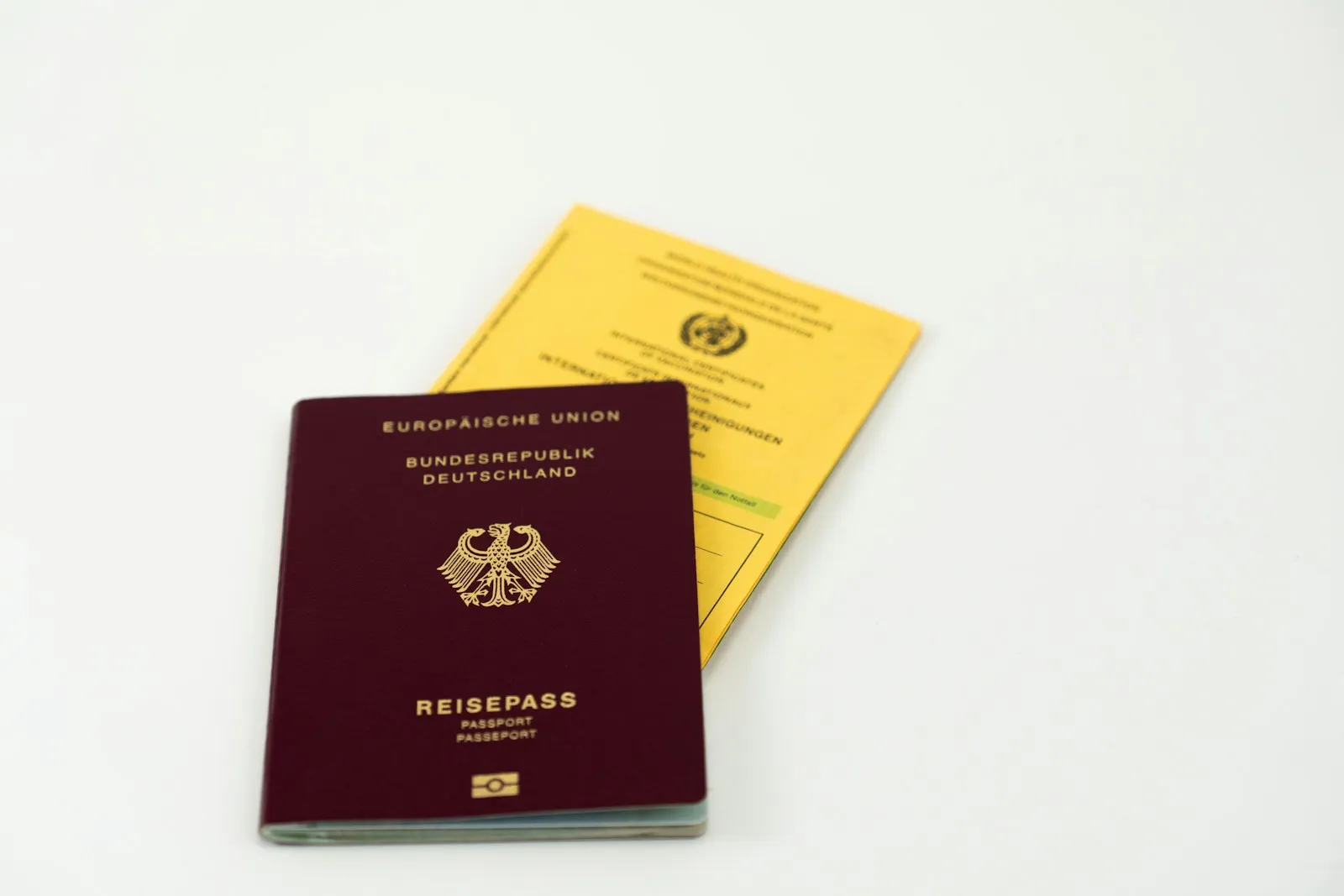
A Sperrkonto (blocked account) is a special German bank account that proves you can financially support yourself during your stay. If you are applying for a student visa, you need EUR 11,904 in it (EUR 992/month) — and the same amount applies to a study-preparatory language course. Only if your language course does not serve study preparation do you need EUR 13,092 (EUR 1,091/month); the same higher rate applies to the Chancenkarte. The EUR 992 rate has been in force since September 2024, the EUR 1,091 rate since 1 January 2025; both are unchanged in 2026. You can open one online from your home country in about 10 minutes. Monthly payouts of the set amount are released once you arrive in Germany and activate the account.
This guide covers every detail: the current amounts, which providers exist, how to open the account step by step, how activation works after you land, and the mistakes that cost people time and money.
What Is a Sperrkonto?
A Sperrkonto is a restricted bank account held at a German financial institution. The word literally translates to “blocked account.” You deposit a lump sum before applying for your visa. The money is then locked. You cannot withdraw it freely. Instead, a fixed monthly amount is released to your regular German bank account after you arrive.
Why Does It Exist?
German immigration law requires you to prove a “secured livelihood” (gesicherter Lebensunterhalt). The legal basis is section 2, paragraph 3 of the Aufenthaltsgesetz (§ 2 Abs. 3 AufenthG). This rule applies to almost every residence permit. The government wants to ensure you will not depend on public welfare.
A Sperrkonto is the simplest and most widely accepted form of this proof. Embassies and consulates around the world recognize it without question. Other forms of financial proof exist — scholarship letters, sponsor declarations, parental bank statements — but they invite scrutiny. A Sperrkonto does not.
How Does It Work in Practice?
Think of it as a savings account with a timer. You deposit the full amount before your visa application. After you arrive in Germany, you activate the account with your local address registration (Anmeldung). Then the account releases one month’s allowance every 30 days into a regular bank account you control. You can spend that monthly amount however you want.
The key restriction: you cannot withdraw the entire balance at once. The account is designed to drip-feed your living expenses over the duration of your stay. This protects both you and the German state.
Who Needs a Sperrkonto?
Not everyone coming to Germany needs a blocked account. The requirement depends on your visa type and nationality.
You Need a Sperrkonto If You Are Applying For:
- Student visa (§ 16b AufenthG) — the most common case
- Language course visa (§ 16f AufenthG) — for intensive German courses. See our complete language course visa guide for full details.
- Chancenkarte (§ 20a AufenthG) — the Opportunity Card for job seekers. Our Chancenkarte guide explains the points system and requirements.
- Study preparation visa (Studienkolleg attendance)
- Pre-study German language course leading to university admission
You Do NOT Need a Sperrkonto If:
- You hold an EU, EEA, or Swiss passport — you have freedom of movement
- You already have a German residence permit for another purpose
- You can prove finances through a scholarship that meets the monthly threshold
- You have a formal obligation letter (Verpflichtungserklärung) from a sponsor in Germany
- You are from a visa-exempt country and staying less than 90 days
Important: Even if you technically qualify for an alternative (scholarship, sponsor letter), most immigration lawyers recommend opening a Sperrkonto anyway. It eliminates ambiguity. Embassies process applications faster when they see a Sperrkonto because there is nothing to interpret or verify.
How Much Money Do You Need?
The required amount depends on which visa you are applying for. The monthly amounts are derived from the BAföG rate under § 13 BAföG (the German student financial aid law): the EUR 992 rate has applied since September 2024, the EUR 1,091 rate since 1 January 2025.
Current Amounts (2026)
| Purpose of Stay | Legal Basis | Monthly Amount | 12-Month Total |
|---|
| Student visa | § 16b AufenthG | EUR 992 | EUR 11,904 |
| Study-preparatory language course | § 16f AufenthG | EUR 992 | EUR 11,904 |
| Language course without study preparation | § 16f Abs. 1 AufenthG | EUR 1,091 | EUR 13,092 |
| Chancenkarte | § 20a AufenthG | EUR 1,091 | EUR 13,092 |
The single most expensive misunderstanding in this guide: the language course visa has two rates, not one. Anyone taking a study-preparatory course who still deposits EUR 13,092 locks up EUR 1,188 more than the law requires.
Why Two Different Rates for the Same Visa?
The lower rate of EUR 992 comes from § 2 Abs. 3 sentence 5 AufenthG. It is tied to the maximum BAföG rate under § 13 BAföG and covers university study, school attendance, and study-preparatory language courses.
That same sentence, however, explicitly carves out “participants in language courses that do not serve study preparation.” For them, § 2 Abs. 3 sentence 6 AufenthG applies: the sentence-5 amount plus 10 percent, which is EUR 1,091 per month. Administrative practice applies the same sentence-6 amount to the Chancenkarte (§ 20a AufenthG).
The practical reasoning behind the surcharge: students and study-preparatory learners have access to subsidized campus housing (Studentenwohnheim), cheaper cafeterias (Mensa), and semester ticket transport discounts. People taking a general language course usually do not — hence the extra EUR 99 per month.
Is Your Course Study-Preparatory?
A language course counts as study-preparatory when it is aimed specifically at university study in Germany. Typical cases:
- preparation for DSH, TestDaF, telc Deutsch C1 Hochschule, or the Feststellungsprüfung
- a Studienkolleg preparation course
- a language course backed by a (conditional) university admission letter or a preparation agreement with a German university
A general German course taken for professional or personal reasons is not study-preparatory. What decides the case is what you can document: ask your school to state the study-preparatory purpose in writing on the course confirmation before you deposit the lower amount. Without that proof, the embassy will apply the EUR 1,091 rate.
What If Your Stay Is Shorter Than 12 Months?
You only need to deposit enough to cover the months of your intended stay. If your language course lasts 6 months and does not serve study preparation, you deposit 6 times EUR 1,091 = EUR 6,546. If the same course is study-preparatory, 6 times EUR 992 = EUR 5,952 is enough. If your university semester starts in 4 months, you deposit 4 times EUR 992 = EUR 3,968.
However, most embassies recommend depositing the full 12-month amount. A shorter deposit means you will need to top up your Sperrkonto or prove continued finances when renewing your residence permit at the Ausländerbehörde (foreigners’ office).
Historical Amounts
The required amount has increased steadily over the years. This table shows the trend:
| Period | Monthly Amount (Student Visa) | 12-Month Total |
|---|
| Before October 2022 | EUR 861 | EUR 10,332 |
| October 2022 — August 2024 | EUR 934 | EUR 11,208 |
| Since September 2024 | EUR 992 | EUR 11,904 |
The higher rate for language courses without study preparation and for the Chancenkarte (the sentence-5 amount plus 10 percent) followed its own timeline:
| Period | Monthly Amount (Language Course Without Study Preparation, Chancenkarte) | 12-Month Total |
|---|
| Calendar year 2024 | EUR 1,027 | EUR 12,324 |
| Since 1 January 2025 | EUR 1,091 | EUR 13,092 |
As of 2026 both current rates still apply — EUR 992 since September 2024 and EUR 1,091 since 1 January 2025. Plan for future increases: if you are applying 6 months from now, the amount may have risen again. Always check the current rate on the website of the German embassy in your country before depositing.
Sperrkonto Providers
You have two main options: an online fintech provider or a traditional German bank. Both produce a valid Sperrkonto accepted by every German embassy.
Online Providers
These companies specialize in Sperrkonto services for international students. You can open the account entirely from your home country, usually within 1-3 business days.
- Expatrio — the most widely used online Sperrkonto provider. Partners with many German universities.
- Fintiba — established provider with a combined Sperrkonto and health insurance product.
- Studely — newer provider positioned as a budget option.
Each provider charges a one-time setup fee (typically EUR 50-150) plus a monthly maintenance fee. Features vary — some include a companion regular bank account, health insurance bundles, or mobile apps.
Note: Coracle, a former online provider, suspended its Sperrkonto services in August 2025. Deutsche Bank ceased offering the product in July 2022. If you see outdated guides recommending either, ignore that advice.
Traditional German Banks
Some German banks still offer Sperrkonto accounts. These include institutions like Sparkasse, DKB, and Commerzbank. However, opening a Sperrkonto at a traditional bank is more complicated from abroad. You typically need to visit a branch in person or go through a lengthier paper-based process. Most international applicants choose an online provider for convenience.
Traditional banks may make sense if you are already in Germany (for example, on a tourist visa or visiting family) and can walk into a branch. Some students also prefer traditional banks because they want all their banking with one institution after arrival.
Which Provider Should You Choose?
This guide does not recommend one provider over another. Prices, features, and customer service quality change frequently. What matters is that the account meets the legal requirements. Before choosing:
- Check the current setup fee and monthly fee on each provider’s website
- Read recent reviews from students who used the service in the past 6 months
- Confirm the provider issues a Sperrbescheinigung (blocking confirmation) that your specific embassy accepts
- Check if the provider offers a companion regular bank account — this simplifies the monthly payout process
How to Open a Sperrkonto: Step by Step
The process is straightforward regardless of which provider you choose. Most applicants complete it in under two weeks.
Step 1: Choose Your Provider and Register
Go to the provider’s website and create an account. You will need to enter your personal details: full name (exactly as it appears on your passport), date of birth, nationality, email, and phone number. Some providers also ask for your intended university or language school.
This step takes about 5-10 minutes.
Step 2: Verify Your Identity
German financial regulations (Geldwäschegesetz — anti-money-laundering law) require identity verification. Online providers use one of two methods:
- Video identification (Video-Ident): A live video call with an agent. You hold up your passport, answer a few questions, and the agent verifies your identity in real time. Takes about 10 minutes. Available 7 days a week with most providers.
- Post-Ident: You visit a post office or partner location, show your passport, and a clerk verifies your identity. More common for traditional banks.
Some providers now accept automated identity verification through AI-powered document scanning. You upload photos of your passport and a selfie. This is the fastest method — often completed in minutes.
Step 3: Receive Your Account Details
After verification, the provider creates your Sperrkonto. You receive a confirmation email with:
- Your IBAN (International Bank Account Number) — starts with DE for Germany
- The BIC/SWIFT code of the bank
- The exact amount to transfer (based on the duration you selected)
- A reference number to include in your bank transfer
This typically arrives within 1-3 business days after identity verification.
Step 4: Transfer the Money
Send the required amount via international bank transfer (SWIFT transfer) from your home country bank account. Use the exact IBAN, BIC, and reference number provided.
Critical details for the transfer:
- Send the amount in EUR. If you send in another currency, conversion fees and exchange rate differences may result in the wrong amount arriving.
- Include the reference number in the payment description. Without it, the provider cannot match the transfer to your account.
- Bank transfers from outside Europe take 3-7 business days. Plan accordingly.
- Some countries impose foreign exchange restrictions (India, Nigeria, China). Check with your local bank about any required documentation (for example, India requires an A2 form or liberalized remittance scheme declaration).
Tip: Transfer slightly more than the minimum required amount — EUR 50-100 extra provides a buffer against exchange rate fluctuations and transfer fees charged by intermediary banks. Any excess amount above the required minimum remains accessible in your account.
Step 5: Receive Your Sperrbescheinigung (Blocking Confirmation)
Once the full amount arrives in your Sperrkonto, the provider issues a Sperrbescheinigung. This is the official document you submit to the German embassy or consulate with your visa application.
The Sperrbescheinigung contains:
- Your name and date of birth
- The account number
- The total deposited amount
- The monthly release amount
- A statement confirming the account meets § 2 Abs. 3 AufenthG requirements
Most providers generate this document digitally as a PDF. You can download and print it immediately. The entire process from registration to receiving the Sperrbescheinigung takes 1-3 weeks, depending on how quickly your bank transfer arrives.
Step 6: Submit with Your Visa Application
Include the printed Sperrbescheinigung in your visa application documents. The embassy requires the original or a certified copy, depending on the consulate. Check your specific embassy’s document checklist. Our visa document checklist by country covers the requirements for major sending countries.
Some embassies also ask for a recent account statement showing the current balance. Download this from your provider’s portal and print it the day before your appointment.
After Arrival: Activation and Monthly Payouts
Your Sperrkonto sits dormant until you activate it. Nothing happens automatically. You must take action after landing in Germany.
How to Activate Your Sperrkonto
Within the first few weeks of arriving, you need to:
- Register your address (Anmeldung) at your local Bürgeramt (citizens’ office). This is mandatory for everyone living in Germany, not just for the Sperrkonto.
- Open a regular German bank account (Girokonto). This is the account where your monthly Sperrkonto payouts will land. Most online providers either include a companion Girokonto or partner with a bank that offers one.
- Upload your Anmeldung confirmation and your German bank account details (IBAN) to your Sperrkonto provider’s portal.
- Wait for activation. The provider verifies your documents and activates the monthly payout schedule. This takes 1-5 business days.
How Monthly Payouts Work
Once activated, your Sperrkonto releases a fixed amount every month:
- EUR 992/month for student visa holders and for study-preparatory language course students
- EUR 1,091/month for language course students without study preparation and for Chancenkarte holders
The payout happens automatically on the same day each month (typically the day your account was activated). The money transfers to your linked Girokonto. You can then use it for rent, groceries, health insurance, transport — anything you need.
You cannot withdraw more than the monthly amount. The remaining balance stays locked until the following month’s release date.
What If You Need More Money in a Given Month?
The monthly limit is strict. You cannot request an early or extra payout. If you face an emergency, your options are:
- Ask family to send money to your regular Girokonto (not the Sperrkonto)
- Use savings in a separate account
- If your stay is ending early, some providers allow an early closure of the Sperrkonto with release of the remaining balance — but only with proof that you are leaving Germany (flight ticket, deregistration confirmation)
Closing the Sperrkonto
When your stay ends or you no longer need the account, you can close it and receive any remaining balance. You typically need to provide:
- Deregistration confirmation (Abmeldung) from the Bürgeramt
- Proof of departure (boarding pass, flight booking) or a new residence permit showing a different financial proof
The remaining balance is transferred to a bank account you specify. Closure takes 2-4 weeks depending on the provider.
Common Mistakes to Avoid
These errors cause delays, rejected applications, and lost money. Every one of them is preventable.
1. Depositing the wrong amount. The most frequent mistake. Student visa applicants deposit the language course amount or vice versa. The costliest variant: booking a study-preparatory language course and still depositing EUR 1,091 per month — that locks up EUR 1,188 more per year than § 2 Abs. 3 sentence 5 AufenthG requires. Double-check which visa you are applying for, and whether your course serves study preparation, then match the exact monthly rate. If you cannot document the study-preparatory purpose, deposit the higher amount (EUR 1,091/month); excess funds remain accessible.
2. Sending the transfer without the reference number. Your provider cannot match an anonymous transfer to your account. If you forget the reference number, the money may sit in a suspense account for weeks. You will then need to contact customer support with proof of transfer to get it allocated.
3. Transferring in local currency instead of EUR. If you send Indian rupees or Nigerian naira, your bank and intermediary banks will convert it at their exchange rates and deduct fees. The amount arriving in Germany may be less than required. Always convert to EUR before sending, or ensure the full EUR amount arrives after fees.
4. Starting too late. International bank transfers take 3-7 business days. Identity verification takes 1-3 days. The Sperrbescheinigung takes another 1-2 days after the money arrives. If your embassy appointment is in 5 days, you are too late. Start the Sperrkonto process at least 3-4 weeks before your visa appointment.
5. Using an outdated amount. The required deposit increases periodically. If you read a guide from 2023, it will show EUR 934/month. That number is wrong for 2026. Always verify the current amount on the German embassy website or on the provider’s website before transferring.
6. Not keeping proof of the transfer. Your bank may not store transaction records indefinitely. Save a screenshot or PDF of the transfer confirmation. You may need it if the money does not arrive, if the embassy asks for additional proof, or if you need to dispute a transaction.
7. Ignoring transfer limits in your home country. Countries like India (Liberalised Remittance Scheme limit of USD 250,000/year), China (annual USD 50,000 limit per person), and Nigeria (PTA/BTA limits) have foreign exchange restrictions. If you bump against a limit, your transfer may be blocked or delayed. Contact your home bank early to understand any documentation needed.
8. Forgetting to activate the account after arrival. Your Sperrkonto does not start paying out automatically. If you do not upload your Anmeldung and Girokonto details, the money stays locked. Some students arrive, get busy settling in, and forget about activation for weeks — leaving themselves without access to their own money.
9. Opening the account at the wrong provider and paying twice. If you switch providers after making a deposit, getting a refund from the first provider can take 4-8 weeks. Research providers thoroughly before depositing. Do not rush into the first option you find.
10. Confusing the Sperrkonto with a regular bank account. A Sperrkonto is not for daily banking. You cannot receive your salary into it, use it for direct debits, or get a debit card for it. You need a separate Girokonto for everyday transactions.
Frequently Asked Questions
Can I open a Sperrkonto from any country?
Yes. All major online providers accept applications from virtually every country. The process is entirely online: registration, identity verification via video call, and document upload. Your physical location does not matter. However, some countries have complications with the bank transfer step due to foreign exchange regulations or SWIFT network issues. Students from Iran, Syria, and North Korea may face additional scrutiny due to international sanctions. If you are in a sanctioned country, contact the provider’s support team before starting the process.
How long does the entire process take from start to finish?
Plan for 2-3 weeks in total. Registration and identity verification take 1-3 days. The international bank transfer takes 3-7 business days. The provider needs 1-2 business days to verify the deposit and issue the Sperrbescheinigung. In practice, students from countries with slower banking systems (parts of Africa, Central Asia) should plan for 4 weeks. Students in the EU or countries with fast SWIFT transfers (USA, UK, Canada) sometimes complete it in under 10 days. Start early — there is no penalty for having a Sperrkonto ready months before your visa appointment.
What happens to the money if my visa is rejected?
Your money is safe. A visa rejection does not affect your Sperrkonto. The funds remain in your account. You have three options: keep the account open and apply again (many students reapply successfully on the second attempt), transfer the balance to another Sperrkonto if switching providers, or close the account and receive a full refund minus any fees. Closing the account after a visa rejection typically takes 2-4 weeks. You will need to submit a closure request through the provider’s portal and specify a bank account for the refund. The provider may charge an early closure fee (usually EUR 50-100).
Does every language course visa require the same amount?
No — and this is the most expensive misconception around the Sperrkonto. The language course visa under § 16f AufenthG has two rates. If your course is study-preparatory — preparing you for DSH, TestDaF, telc Deutsch C1 Hochschule, the Feststellungsprüfung, or a Studienkolleg — the rate in § 2 Abs. 3 sentence 5 AufenthG applies: EUR 992/month, or EUR 11,904 for a full year, exactly the same as the student visa. If your course does not serve study preparation, sentence 5 explicitly excludes you and § 2 Abs. 3 sentence 6 AufenthG applies instead, adding 10 percent: EUR 1,091/month, or EUR 13,092 per year. The gap is EUR 1,188 per year that would otherwise sit blocked for no reason. One caveat: you have to be able to prove the study-preparatory purpose. Ask your language school to state it in writing on the course confirmation — without that document the embassy applies the higher rate. The EUR 992 rate has applied since September 2024, the EUR 1,091 rate since 1 January 2025; both are unchanged in 2026.
Can I top up my Sperrkonto later?
Yes. You can add money to your Sperrkonto at any time. This is useful in two situations. First, when you need to extend your stay and the Ausländerbehörde requires proof of additional months of financial security. Second, when the required monthly amount increases and you need to match the new rate for a visa renewal. Simply transfer additional funds using the same IBAN and reference number. The provider will update your Sperrbescheinigung to reflect the new balance.
Do I earn interest on my Sperrkonto balance?
It depends on the provider. Some providers pay a small amount of interest on the blocked balance. Others pay nothing. The interest rates, when offered, are typically very low — often below 1% per year. Do not choose a provider based on interest rates. The amounts are too small to matter. Focus on fees, customer service, and processing speed instead. Your primary goal is getting the Sperrbescheinigung quickly and reliably, not earning a return on your deposit.
Can I use a Sperrkonto for a work visa or Blue Card?
No. The Sperrkonto is designed for visa categories where the applicant does not yet have employment income in Germany: student visas, language course visas, and the Chancenkarte. If you are applying for a Blue Card or a standard work visa, you prove your financial means through your employment contract and salary level. Your employer’s offer of a salary above the required threshold replaces the need for a Sperrkonto. If you already have a Sperrkonto from a previous student or language course visa and are now switching to a work visa, you can close the Sperrkonto and withdraw the remaining balance.
What is the difference between a Sperrkonto and a Mietkautionskonto?
These are two different types of blocked accounts that serve different purposes. A Sperrkonto proves financial means for your visa application. The monthly payouts go to you for living expenses. A Mietkautionskonto (rental deposit account) holds your apartment security deposit (Kaution), typically 2-3 months of net rent. The money in a Mietkautionskonto belongs to you but is pledged to your landlord. It is released only when you move out and the landlord confirms no damages. You will likely need both accounts during your time in Germany. They are opened at different institutions and serve completely separate legal functions.
Can my parents open a Sperrkonto on my behalf?
No. The Sperrkonto must be in your name — the person applying for the visa. Your parents cannot open it in their name and have it count for your application. However, your parents can fund it. The money can come from anyone’s bank account. What matters is that the account itself is registered to you, with your passport details. During the transfer, the sender’s name does not need to match the account holder. So the practical workflow is: you register the account, you complete identity verification, and your parents send the money to the IBAN provided.
Your Next Steps
The Sperrkonto is a mandatory checkpoint on your path to Germany. It is not complicated, but it requires planning. Transferring EUR 11,904 or EUR 13,092 internationally takes time. Start the process early and give yourself a buffer.
- Decide your visa type and whether your course is study-preparatory — this determines how much you deposit (EUR 992/month for students and study-preparatory language courses, EUR 1,091/month for language courses without study preparation and for Chancenkarte applicants)
- Choose a provider — compare current fees and features on Expatrio, Fintiba, and Studely
- Open the account and transfer funds — allow 2-3 weeks for the full process
- Get your Sperrbescheinigung — download and print it for your visa application
- Find your language school — search accredited schools across Germany by city, price, and course type
If you are applying for a language course visa, read our complete language course visa guide next. If you are preparing your full document package, our visa document checklist by country covers exactly what each embassy requires. And if you are exploring Germany as a destination, our best cities to learn German comparison helps you narrow down where to study.
Ready to find the right language school in Germany? Browse our database of accredited German language schools with verified information, transparent pricing, and course details for every level. Find your school now.
Related Articles

 language-school