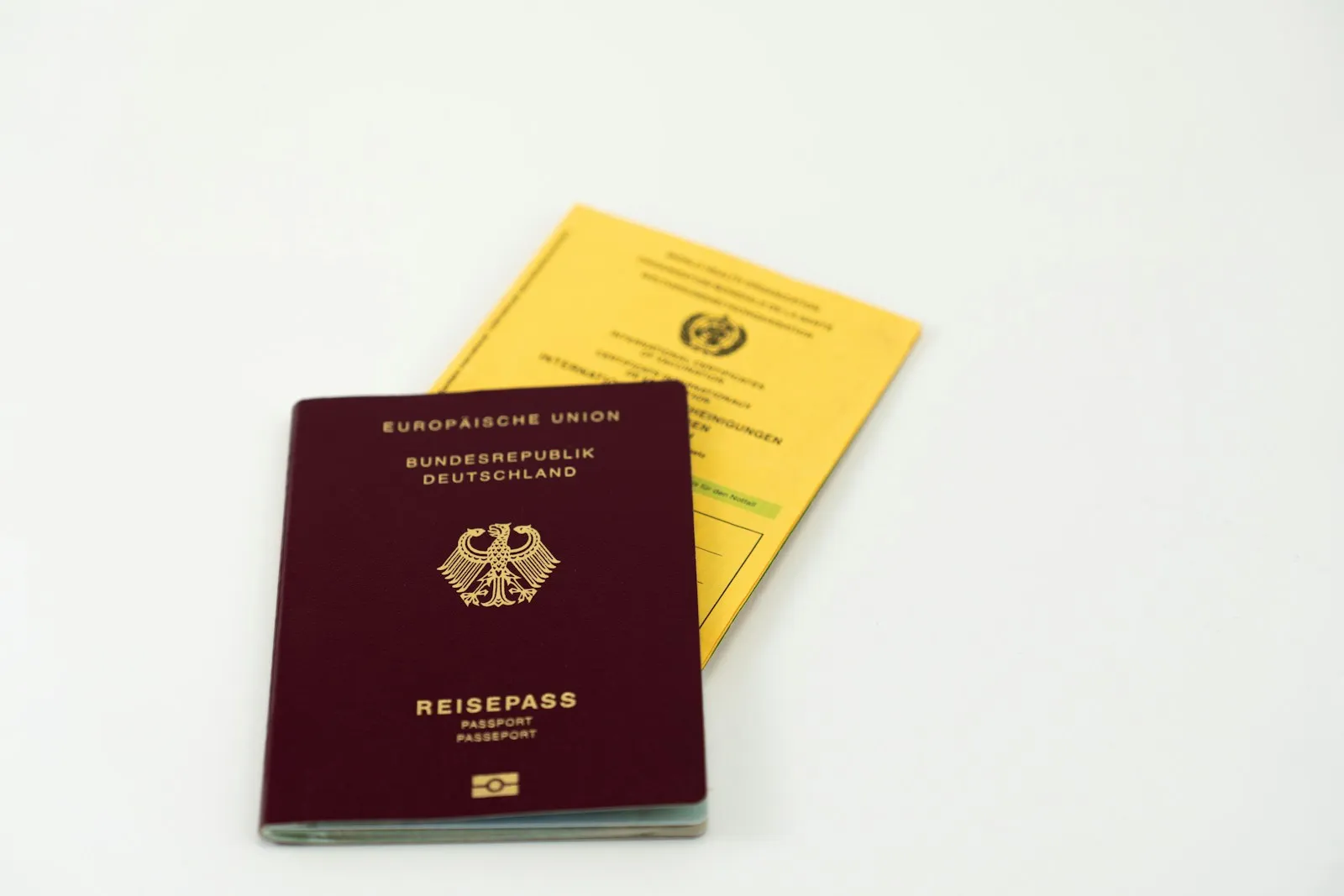
Health insurance is mandatory for the German language course visa (Sprachkursvisum) and must be valid from the moment you enter Germany. You need at least 30,000 € coverage and medical repatriation included (as of 2026). Since language students on a visa are generally not eligible for statutory health insurance (GKV), almost everyone uses a private expat policy. There is no officially set premium for these policies: what you pay depends on the insurer, your age, the policy term, and the benefits included — so always compare several quotes. This guide compares the four main providers, explains visa requirements, and walks you through the signup process step by step.
Do I Need Health Insurance as a Language Student?
Yes — without health insurance, you will not get a visa. This is not optional guidance; it is a legal requirement.
The legal basis
§ 193 VVG (German Insurance Contract Act) establishes that every person resident in Germany must hold health insurance. For non-EU citizens applying for a visa, a health insurance confirmation is also a mandatory document in the visa application.
German embassies and the Ausländerbehörde check for:
- Coverage of at least 30,000 € for medical treatment (as of 2026)
- Validity starting from the entry date, continuous until course end
- Medical repatriation to the home country included
- Insurer licensed in the EU or an approved partner
A missing insurance document leads to immediate visa rejection. You cannot submit it afterwards — you need the policy before your embassy appointment.
Why no exception for short stays?
Even if your course lasts only three months and you are young and healthy: a hospital stay in Germany can cost 10,000–50,000 € quickly (as of 2026). Without insurance you bear those costs yourself. The German healthcare system treats everyone, but the invoice still arrives.
For the German state, health insurance is also a signal that you have planned your stay responsibly.
Statutory (GKV) vs. Private Insurance — What Is Available to Language Students?
Germany’s insurance system has two pillars: statutory health insurance (GKV, gesetzliche Krankenversicherung) and private health insurance (PKV, private Krankenversicherung). Most language students cannot access GKV.
Why is GKV not available to language students?
GKV membership is linked to specific groups:
- Employees earning more than 603 € gross per month (mini-job threshold under § 8 para. 1a SGB IV, as of 2026)
- Apprentices (Auszubildende) in a German training company
- Students enrolled (immatrikuliert) at German universities (discounted student rate of around 143–148 €/month, as of 2026 — see below)
Someone entering Germany on a language course visa (§ 16f AufenthG) and attending only a language school does not belong to any of these groups. You cannot voluntarily join GKV if you are not employed, an apprentice, or a matriculated university student.
Rule of thumb: Language course visa → private expat insurance is standard.
When does GKV become relevant?
There are situations where GKV becomes available later:
| Situation | Insurance |
|---|
| Language course only (visa § 16f) | Private expat policy |
| Mini-job up to 603 €/month during the course (as of 2026) | Marginally employed students stay privately insured |
| Enrolled at a German university after the course | GKV student rate approx. 143–148 €/month (as of 2026) |
| Start an apprenticeship (over 603 € gross, as of 2026) | GKV mandatory from first wage |
| Start full-time employment | GKV mandatory |
Switching to GKV makes sense and is usually cheaper once you become a matriculated student or apprentice. Until then, an expat policy is the right solution.
The 4 Main Expat Insurers for Language Students Compared
Many insurers exist, but only a few are reliably accepted by German embassies worldwide. These four have become the standard solution for language students.
One thing first: there is no official price source for expat and incoming policies. Premiums are freely calculated and depend on the insurer, your age, the policy term, the deductible, and the benefits included. That is why we deliberately name no monthly premiums here — only the policy features. Get the prices as concrete quotes directly from the insurer.
DR-WALTER EDUCARE24
DR-WALTER is one of Germany’s best-known expat insurers with decades of experience. The EDUCARE24 product is specifically designed for international students and language learners.
- Premium: insurer-dependent — request a quote for your exact term
- Coverage: 5 million € per insured event (as of 2026)
- Partnership: Goethe-Institut recommends DR-WALTER
- Languages: Customer service in German and English
- Highlights: Optional dental add-on, pre/post-treatment coverage available
DR-WALTER is especially recommended if you are taking a course at a Goethe-Institut school or a larger language institute with an existing partnership.
Care Concept Care College
Care Concept specialises in international students and language learners and has a strong reputation in the expat community.
- Premium: insurer-dependent — request a quote for your exact term
- Coverage: 30,000 € in the basic plan (as of 2026), higher tiers bookable
- Online signup: Fully digital, policy issued instantly
- Duration: Flexible, bookable from 1 month
- Highlights: Embassy confirmation document available immediately
Care Concept is a good choice when you need a policy quickly — for example if your embassy appointment was confirmed at short notice.
Mawista Visum
Mawista is known because many German embassies worldwide explicitly recommend this provider on their visa information pages.
- Premium: insurer-dependent — request a quote for your exact term
- Coverage: 30,000 € in the basic plan (as of 2026), higher plans available
- Embassy recommendation: Frequently listed on visa info pages
- Flexibility: Cancellation at any time
- Highlights: Considered one of the most affordable visa-approved products on the market
If you want the cheapest visa-compliant insurance, check Mawista first — but still compare at least two other quotes. Note: the basic plan meets all minimum requirements, but for embassies with stricter standards (e.g. for the Chancenkarte under § 20a AufenthG) choose the premium plan.
AWP Health & Life
AWP (formerly Allianz Worldwide Partners) is the premium tier. For language students who want comprehensive coverage.
- Premium: insurer-dependent — request a quote for your exact term
- Coverage: from 100,000 € (as of 2026), extensive benefits catalogue including preventive care
- Level: Close to GKV standard
- Target: Language students with higher security needs or pre-existing conditions
- Highlights: Worldwide coverage, not just Germany
Comparison Table
| Provider | Premium tier | Visa Acceptance | Min. Coverage (as of 2026) | Cancellation |
|---|
| DR-WALTER EDUCARE24 | Mid-range | Excellent | 5 million € | Anytime |
| Care Concept Care College | Mid-range | Excellent | 30,000 € | Anytime |
| Mawista Visum | Entry level | Good (embassy rec.) | 30,000 € | Anytime |
| AWP Health & Life | Premium | Excellent | 100,000 € | Anytime |
All four providers accept online applications and issue the insurance confirmation as a PDF — exactly what the embassy needs for your language course visa application.
When Is GKV Worthwhile or Available?
Statutory health insurance is cheaper and more comprehensive in the long run. If you stay in Germany after your language course, you should consider switching.
Starting university: GKV student rate
Once you are matriculated at a German university, you can join a statutory health insurer at the discounted student rate (§ 5 para. 1 no. 9 SGB V). It is reserved for students enrolled at a university and applies at most until the age of 30. As of 2026 it consists of 87.38 € health insurance + the insurer’s supplementary contribution (average 2.9 %, about 24.80 €) + 30.78 € long-term care insurance (35.91 € if you are 23 or older and childless) — around 143–148 €/month at the average supplementary contribution, roughly 139–160 €/month depending on the insurer.
This is the most affordable GKV option available. Important: attending a private language school is not enrolment. Without a university matriculation certificate no statutory insurer can give you this rate. Once matriculated, you get access to the full GKV benefits catalogue: GP and specialist visits, hospital care, medication, dental, and mental health services.
Timing the switch: You can join GKV from the day of matriculation. Cancel your expat policy for the same date — no gap, no overlap.
Starting an apprenticeship: GKV mandatory
Anyone starting an apprenticeship (Ausbildung) in Germany and earning more than 603 € gross/month (as of 2026) is automatically subject to compulsory GKV. Your employer registers you with a health insurer; contributions are deducted from your wage.
Starting employment: GKV mandatory
Full-time employees earning below the annual income threshold (Jahresarbeitsentgeltgrenze) are compulsorily insured via GKV; only above that threshold can you move to private insurance. The threshold is reset every year — ask your health insurer for the current figure. Your employer handles the registration.
Weighing it up
| Situation | Recommendation |
|---|
| Language course only (visa § 16f) | Private expat policy |
| Language course + university planned afterwards | Expat → GKV at matriculation |
| Language course + apprenticeship planned afterwards | Expat → GKV at apprenticeship start |
| Undecided, no plan afterwards | Expat policy for the course duration |
What Must a Visa-Compliant Health Insurance Cover?
Not every health insurance is accepted by German embassies. These minimum requirements must be met.
Mandatory benefits
- Minimum medical treatment costs: 30,000 € per insured event (as of 2026)
- Medical repatriation: Return transport to the home country must be included
- Territorial scope: Germany (Schengen area recommended)
- Duration: Continuous from the planned entry date
- No excessive excess: Deductibles that effectively prevent use are not acceptable
Higher requirements for the Chancenkarte
Applicants for the Chancenkarte under § 20a AufenthG encounter stricter criteria at some embassies. A coverage of 100,000 € and an extended benefits catalogue are often required (as of 2026). Check the requirements of your specific embassy directly — they vary slightly from embassy to embassy.
What to check before signing
- Is the start date set to your entry date?
- Does the policy explicitly include medical repatriation?
- Is the coverage at least 30,000 €?
- Is there a waiting period before first use?
- Is the excess not higher than 20-30 %?
The Second Mandatory Document: The Blocked Account
Health insurance is only half of the proof. The other half is proof of funds under § 2 para. 3 AufenthG — the blocked account (Sperrkonto). And for language courses there is a two-way split that many applicants miss (as of 2026):
- Preparatory language course (§ 16f AufenthG) and degree studies (§ 16b): 992 € per month, i.e. 11,904 € for twelve months
- Language course without study preparation (§ 16f para. 1 AufenthG): 1,091 € per month, i.e. 13,092 € for twelve months
- Chancenkarte (§ 20a AufenthG): likewise 1,091 € per month or 13,092 € per year
So what matters is whether your course counts as study-preparatory. Get that confirmed in writing by your language school before you fund the blocked account — the difference is 99 € per month and 1,188 € per year. Details in the blocked account guide.
How to Sign Up: Step by Step
Signing up for an expat health insurance policy takes about 15–30 minutes online.
Step 1: Choose a provider and get a quote
Go to the insurer’s website and enter:
- Date of birth (determines age bracket and price)
- Planned entry date
- Planned departure date (course duration + 30 days buffer recommended)
- Purpose of insurance (language course / visa)
The price is calculated immediately. Run the same period through at least three insurers — that is the only way to see what is normal on the market.
Step 2: Enter personal details
Enter details exactly as they appear in your passport:
- Full name
- Date of birth
- Nationality
- Current home address
- Email address
Step 3: Upload passport scan
Most providers require a scan of your passport data page. This verifies your identity and ensures the name on the policy matches your passport.
Step 4: Enter payment details and pay
Payment by credit card, debit card, or SEPA direct debit. Choose a one-off payment or monthly billing.
Step 5: Receive your insurance confirmation
Immediately after purchase you receive:
- The insurance policy as a PDF
- A visa confirmation in German (often English too)
- Your policy number
Print the visa confirmation. It goes into your visa application. The embassy requires a printed document — not a screenshot on your phone.
Timing: How far in advance?
Sign up at least 1–2 weeks before your embassy appointment. Set the start date to your planned entry date — not earlier, not later. An early start date means paying premiums for time you are not yet in Germany.
What to Do When You Fall Ill
You are sick in Germany — what now?
At the GP (general practitioner)
- Call ahead and make an appointment (or use the acute walk-in slot)
- Show your insurance card or insurance confirmation PDF
- The doctor treats you and issues an invoice
- With private expat insurance, the cost-reimbursement principle usually applies: you pay first and submit the invoice to the insurer — reimbursement typically within 1–2 weeks
Tip: Always ask for an invoice and any test results. No invoice, no reimbursement.
At the pharmacy
Show your insurance documents. Some pharmacies cooperate directly with private insurers — but this is not universal. If in doubt, pay and submit the receipt.
In an emergency (hospital, ambulance)
- Emergency number: 112 (ambulance) or 110 (police)
- Go to the Notaufnahme (emergency department) of the nearest hospital
- You will always be treated, even without insurance documents at hand
- Tell the emergency department you have private insurance
- The hospital sends the invoice to you or your insurer
In an emergency, treatment comes first. Handle the paperwork afterwards.
Submitting invoices
Submit invoices via email, app, or post. Most providers have an online app for uploading invoices. Important: most policies have a submission deadline of 3–6 months after treatment.
Switching to GKV After University Enrollment or Employment
If you stay in Germany after your course and study or work, you switch to statutory health insurance.
How the switch works
- Choose a statutory insurer (TK, AOK, Barmer, DAK — all offer comparable benefits)
- Apply online — free and takes 10 minutes
- Set the start date — matriculation date (university) or contract start (employment)
- Cancel the expat policy for the same date with proof of GKV membership
No gap in coverage
A gap — even one day — can cause problems with the Ausländerbehörde when renewing your residence permit. Plan the switch carefully.
Cancelling the expat policy
All four recommended providers allow cancellation at any time with proof of new insurance. You typically need:
- The GKV membership certificate
- The GKV start date
- A written cancellation by email or online form
Premiums already paid for months after the switch date are usually refunded on a pro-rata basis.
Frequently Asked Questions
Can I use travel insurance instead of health insurance?
No. Travel insurance is not the same as health insurance. Embassies require a full health insurance policy with at least 30,000 € coverage (as of 2026), medical repatriation, and continuous validity for your entire stay. Travel insurance is designed for short holidays and is not accepted for a language course visa.
Does my home country insurance cover Germany?
In most cases, not sufficiently. Some home country insurers offer short-term abroad coverage, but typically only for 30–90 days and without medical repatriation. Ask your home insurer for a written confirmation — the embassy will check it carefully.
What happens if I have pre-existing conditions?
Most expat insurance policies for language students exclude pre-existing conditions. Emergencies and acute illnesses are always covered. Disclose pre-existing conditions honestly on your application — false declarations can lead to claim refusal.
Can I insure my family?
It depends on the insurer. DR-WALTER and Care Concept offer add-on family policies. Each accompanying family member needs their own valid insurance confirmation for the visa application.
What does expat health insurance for language students cost?
There is no official price source for it. Expat and incoming premiums are freely calculated and depend on the insurer, your age, the policy term, the deductible, and the benefits included. Get concrete quotes from several visa-approved insurers for the same term and compare them. Make sure the policy includes the 30,000 € minimum coverage and medical repatriation (as of 2026).
What if I extend my course duration?
Extend the insurance in good time before the old policy expires — possible online in minutes. Even a one-day gap can jeopardize your visa extension.
Do these insurance policies cover dental treatment?
Basic dental emergencies and extractions are usually covered. Implants, crowns, or orthodontics are typically excluded.
What if the embassy rejects my insurance?
Ask for the exact reason. The most common causes: coverage below 30,000 €, missing medical repatriation, or a policy term that does not cover your entry date. Switch to one of the four recommended providers and have a new policy issued — usually within 24 hours.
Next Step
You now know what you need. Here is how to proceed:
- Pick a provider from the four recommended ones (DR-WALTER, Care Concept, Mawista, AWP)
- Get at least three quotes for the same policy term — there are no fixed prices
- Sign up online — start date = planned entry date, term = course duration + 30 days buffer
- Print the visa confirmation and attach it to your visa application
- Combine it with the other mandatory documents: blocked account with 992 €/month (study-preparatory language course) or 1,091 €/month (language course without study preparation), the language school’s course confirmation, and your passport
If you have not chosen a language school yet: on sprachschule.org you will find verified schools across Germany — with real prices and direct enrollment. The cost of language courses in Germany varies by city and intensity — see what fits your budget.
Also plan where you will live during the course. Our guide to housing for language students in Germany covers everything from host families to shared flats.
Related Articles
Ready to find a language school? Compare verified schools across Germany — with transparent prices and direct enrollment. Find language schools now.
 language-school