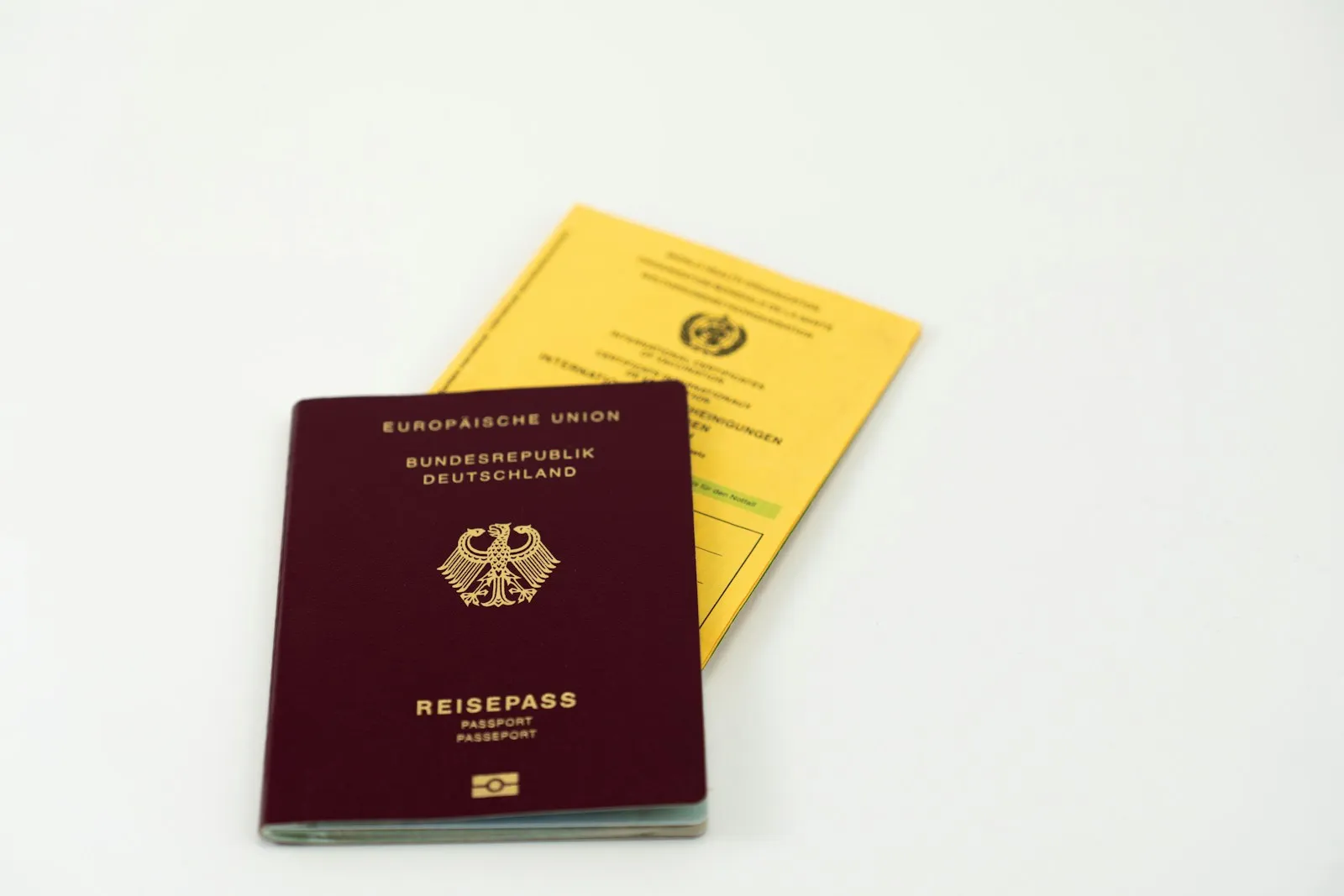
You finished your Goethe-Institut intensive course. Or your language school just issued your B2 certificate. Now you’re standing at the most important bureaucratic crossroads of your Germany journey: what happens to your visa?
The answer depends entirely on what you want to do next — and whether you act early enough. This guide walks you through every scenario: extending your § 16f language course visa, switching to a § 16b student visa, or transitioning to a § 18 work visa. No guesswork, no outdated information, no external links.
The Three Paths After a Language Course Visa
Before diving into paperwork, understand what visa type you currently hold and where you want to go:
| Current Visa | Next Goal | Target Visa |
|---|
| § 16f (Language course) | More language study | § 16f extension |
| § 16f (Language course) | University in Germany | § 16b (Study) |
| § 16f (Language course) | Skilled employment | § 18 (Work) |
| § 16f (Language course) | Job seeking | § 20 (Job Seeker) |
| § 16f (Language course) | Chancenkarte path | § 20a (Chancenkarte) |
The legal basis matters: Germany’s Aufenthaltsgesetz (Residence Act) defines each permit type, and you cannot simply continue living in Germany on an expired permit while “figuring things out.” Every path requires a formal application before your current permit expires.
Step 1: Know Your Current Permit — § 16f Explained
A § 16f Aufenthaltserlaubnis is issued specifically for language courses at recognized language schools. It is typically granted for 1 to 2 years, sometimes renewable once. Key restrictions:
- Work permitted: Up to 120 full days or 240 half-days per year
- Purpose: Language acquisition only — not a pathway to study or work without a formal switch
- Renewability: Limited; the Ausländerbehörde may refuse a second extension if you have not made clear progress
The § 16f visa is not a permanent stepping stone. It is time-limited by design. If you want to stay in Germany beyond its scope, you need to change your legal status — and the clock starts the moment you know your next step.
When to Apply: The 6–8 Week Rule
This is the single most important timing rule in German immigration law:
Apply at the Ausländerbehörde 6 to 8 weeks before your current permit expires.
Why so early? Two reasons:
-
Appointment availability: Most Ausländerbehörde offices in large cities (Berlin, Munich, Hamburg) have waiting times of 4 to 10 weeks for an appointment. If you apply the week before your visa expires, you will be too late — not because the law says so, but because you cannot get a slot in time.
-
Fiktionsbescheinigung protection: If you apply before your permit expires and your application is still being processed, you receive a Fiktionsbescheinigung — a document that legally extends your right to stay during the review period. Without a timely application, this protection does not apply.
Practical tip: Book your Ausländerbehörde appointment the moment you know your plan. In Berlin, use the Landesamt für Einwanderung (LEA) online booking system. In Munich, use the KVR portal. Many cities now allow online pre-applications.
Path A: Extending Your § 16f Visa
If you want to continue language study, you can apply for a § 16f extension. This is the simplest path, but it has strict conditions.
Who qualifies for a § 16f extension?
- You are enrolled in or have confirmed enrollment in another language course at a recognized school
- You have made demonstrable progress (documented by certificates or grade reports)
- You have sufficient financial means (see below)
- The total duration of your § 16f stays does not exceed the legal maximum (usually 2 years total, sometimes 3 years in exceptional cases)
Documents required for § 16f extension
| Document | Notes |
|---|
| Valid passport | Must remain valid at least 3 months beyond requested permit end date |
| Current Aufenthaltserlaubnis | Bring original |
| Enrollment confirmation | From your language school, with course dates and level |
| Proof of progress | Certificates, Zeugnisse, or official grade reports |
| Proof of financial means | Bank statements or Sperrkonto: €992/month for a study-preparatory course, €1,091/month for a language course without study preparation (as of 2026) — or a Verpflichtungserklärung |
| Health insurance proof | Active policy covering Germany |
| Biometric passport photo | Recent, compliant with German standards |
| Rental contract or Wohnungsgeberbestätigung | Proof of registered address |
| Completed application form | Antrag auf Erteilung/Verlängerung einer Aufenthaltserlaubnis |
Financial requirements for § 16f
How much you must prove depends on the type of course (as of 2026):
- Study-preparatory language course (studienvorbereitender Sprachkurs, § 16f): €992 per month = €11,904 per year — the same rate as for a § 16b student permit
- Language course without study preparation (§ 16f para. 1): €1,091 per month = €13,092 per year
For a 6-month extension that means roughly €5,952 in accessible funds for a study-preparatory course and roughly €6,546 for a course without study preparation. A blocked account (Sperrkonto) is accepted but not the only option — regular bank statements showing consistent sufficient balance also work.
Path B: Switching from § 16f to § 16b (University Study)
This is the most common transition. You completed your language course, reached the required German level (usually B2 or C1 for most university programs), and received a Zulassung (admission letter) from a German university. Now you need a § 16b student visa.
Requirements for § 16b
1. University admission letter (Zulassung)
This is non-negotiable. You cannot apply for a § 16b without a confirmed Zulassung from a German university or Hochschule. A preliminary admission (vorläufige Zulassung) may suffice in some offices — confirm directly with your Ausländerbehörde.
2. Sperrkonto (Blocked Account)
For a § 16b student visa, you must demonstrate financial security for the entire study period. As of 2026, the required amount is €11,904 per year (the BAföG Bedarfssatz equivalent). You must open a Sperrkonto at a recognized provider and deposit this amount. Monthly withdrawals are then permitted — typically €992/month. See the dedicated guide for Sperrkonto options: /en/blog/sperrkonto-germany-blocked-account-guide
3. Health insurance switch
Your current health insurance may be travel insurance or a basic expat policy. For a § 16b, you need either:
- German statutory health insurance (gesetzliche Krankenversicherung, GKV) — e.g., TK, AOK, Barmer — at the reduced student rate. This rate exists only for students enrolled at a university and applies at most until the age of 30: around €143–148 per month at the average supplementary contribution (€87.38 health insurance + approx. €24.80 supplementary contribution + €30.78 long-term care insurance, €35.91 if you are 23 or older and childless), roughly €139–160 per month depending on the insurer (as of 2026). As a language school student without enrolment you do not get this rate — you stay on a private expat policy until the day you enrol.
- Private health insurance meeting German student requirements
The switch must happen before your § 16b application. Bring proof of enrollment confirmation and your new insurance to the Ausländerbehörde appointment.
4. University enrollment (Immatrikulationsbescheinigung)
Some offices require actual enrollment before granting § 16b. Others accept the Zulassung. Many students are caught in a chicken-and-egg situation: the university requires insurance, insurance requires enrollment, enrollment requires a visa. Solve this by asking your university’s international office for the correct sequence — they deal with this constantly.
The § 16f → § 16b switch: documents checklist
| Document | Notes |
|---|
| Valid passport | |
| Current § 16f permit | |
| University Zulassung | Original + copy |
| Sperrkonto confirmation | From Coracle, Expatrio, Deutsche Bank, etc. |
| Health insurance confirmation | GKV or private, must be valid in Germany |
| Proof of German language level | B2 or C1 certificate (TestDaF, DSH, Goethe, telc) |
| Biometric passport photo | |
| Rental agreement / Wohnungsgeberbestätigung | |
| Completed application form | |
Fees
The § 16b permit costs €100 (standard fee). Some cities charge an additional administrative fee. Confirm with your local Ausländerbehörde.
Path C: Switching from § 16f to § 18 (Skilled Worker Visa)
If you have a job offer from a German employer, you can switch from your language course visa to a § 18 Aufenthaltserlaubnis für Fachkräfte. This path has become more accessible since Germany’s new skilled worker law (Fachkräfteeinwanderungsgesetz) came fully into force.
Requirements for § 18
1. Concrete job offer (Arbeitsvertrag or binding job offer)
You need a signed employment contract or a binding written job offer. The position must match your qualification level.
2. Recognized qualification
Your university degree or vocational qualification must be recognized in Germany. Recognition can take months — start this process early through anabin (database of recognized foreign qualifications) and, if needed, through the Anabin Vorabprüfung or the official recognition authority in your field.
3. Sufficient salary
The salary must match your qualification. The concrete figures most applicants encounter are the salary thresholds of the EU Blue Card (§ 18g AufenthG), calculated from the 2026 pension insurance contribution ceiling of €101,400 (as of 2026):
- Standard threshold: €50,700 per year (50 % of the ceiling, § 18g para. 1 sentence 1) — no approval by the Federal Employment Agency (BA) needed
- Reduced threshold: €45,934.20 per year (45.3 % of the ceiling, § 18g para. 1 sentence 2 / para. 2) — with BA approval
The reduced threshold is not limited to shortage occupations. It applies in three cases: (a) shortage occupations under ISCO-08 groups 132/133/134/21/221/222/225/226/23/25, (b) career starters whose degree is no more than three years old — in all occupational groups, which is the most common case for language school graduates entering their first German job, and (c) IT specialists without a formal degree who have at least three years of relevant professional experience (§ 18g para. 2).
4. Health insurance
Statutory health insurance (GKV) or private health insurance accepted by German authorities.
Can you switch from § 16f to § 18 inside Germany?
Yes — if you already hold a § 16f permit and receive a job offer, you can apply for the § 18 switch at the Ausländerbehörde without returning to your home country. This is one of the major advantages of being in Germany on a language course visa: you are already in the system.
The Ausländerbehörde will check whether your qualification is recognized, whether the job offer is genuine, and whether all formal conditions are met. Processing time: 4 to 12 weeks, sometimes longer in large cities.
The Fiktionsbescheinigung: Your Safety Net
When you submit a timely extension or status change application and your current permit has not yet expired, you receive a Fiktionsbescheinigung from the Ausländerbehörde. This is a temporary document (usually a stamp in your passport or a paper certificate) that:
- Legally extends your right to stay in Germany during the processing period
- Preserves your work permissions from your previous permit (in most cases)
- Is NOT a new residence permit — it is a placeholder
- Has a specific validity date — do not let it expire without following up
Keep the Fiktionsbescheinigung safe. It is your proof that you are legally in Germany while waiting for your permit decision. Present it at any border crossing, to your landlord, or to your employer when asked.
Common Rejection Reasons — and How to Avoid Them
The Ausländerbehörde rejects extension and status change applications for predictable reasons. Know them in advance:
1. Insufficient financial proof
The most common reason. Bank statements that show a lump sum without regular income history are often questioned. Solution: prepare 3 months of bank statements showing consistent balance, plus a Sperrkonto confirmation if applicable.
2. Missing or invalid health insurance
Expired policies, travel insurance not covering Germany as primary residence, or private insurance not meeting the statutory minimum coverage all lead to rejection. Get your insurance documentation in order before your appointment.
3. Unrecognized qualifications (for § 18 switches)
Submitting a § 18 application without first confirming recognition status of your degree. Use anabin and initiate the recognition process early — ideally 3 to 6 months before your language course ends.
4. Applying too late
If your permit expires before your appointment, your Fiktionsbescheinigung protection is gone. You may be in an unauthorized stay (illegaler Aufenthalt) — a serious legal problem. Book appointments immediately.
The Ausländerbehörde has specific forms for each application type. Using the wrong form, or submitting an incomplete one, causes delays or rejection. Download forms from your city’s official Ausländerbehörde website and fill them out completely.
6. No registered address
You must be registered (angemeldet) at a German address. If you recently moved and have not updated your Anmeldung, do so before your Ausländerbehörde appointment.
The Chancenkarte: An Alternative Path
If you do not yet have a job offer or university admission but want to stay in Germany to look for opportunities, the Chancenkarte (§ 20a) may be an option.
The Chancenkarte is a points-based visa that allows you to live and work part-time in Germany for up to 1 year while searching for a qualifying job. Points are awarded for:
- German language skills (B2 = 2 points, C1 = 4 points)
- Professional experience
- Age (under 35 scores highest)
- Prior stays in Germany
- Tie to Germany (previous education, family)
You need 6 points to qualify. A language school graduate with B2 German, aged under 35, with 2+ years professional experience typically scores well above the threshold.
The Chancenkarte is applied for at the German embassy or consulate in your home country — OR, if you already hold a § 16f permit, you may be able to switch to § 20a at the Ausländerbehörde inside Germany, subject to conditions. Confirm the in-country switch option with your specific Ausländerbehörde.
Timeline Overview: What to Do and When
| Weeks Before Expiry | Action |
|---|
| 12+ weeks | Confirm your next step (university / job / extension) |
| 10 weeks | Gather all documents; open Sperrkonto if needed |
| 8 weeks | Book Ausländerbehörde appointment |
| 6 weeks | Submit online pre-application if available in your city |
| 4 weeks | Confirm appointment; finalize insurance switch |
| 2 weeks | Prepare complete document folder; make copies of everything |
| Appointment day | Bring originals AND copies; arrive 15 minutes early |
| After appointment | Receive Fiktionsbescheinigung; await decision |
Finding the Right Language School First
If you’re not yet in Germany or need to level up your German before a university application, choosing the right language school is the foundation of this whole process. A good school gives you the certificate the Ausländerbehörde and universities will accept — and gets you to your target level on time.
Use the search to find verified schools that offer intensive programs with recognized certificates: /en/search
For a complete guide to the language course visa itself, see: /en/blog/german-language-course-visa-complete-guide
If you’re still in the planning phase with a short Schengen stay: /en/blog/schengen-visa-short-language-course-germany-guide
For working rights during your language course stay: /en/blog/working-during-language-course-germany-complete-guide
Frequently Asked Questions
Can I switch from § 16f to § 16b without leaving Germany?
Yes. If you hold a valid § 16f permit and receive a university Zulassung, you can apply for the status change at your local Ausländerbehörde without returning to your home country. This is one of the main advantages of the in-country application path.
What happens if my visa expires before my appointment?
You may enter a period of unauthorized stay (illegaler Aufenthalt), which has serious legal consequences including potential bans on re-entry. If you realize your appointment is too late, contact the Ausländerbehörde immediately and explain your situation. Many offices have emergency slots for expiring permits.
How long does a § 16b student visa last?
The § 16b is typically issued for 2 years initially, then renewable in 1 or 2 year intervals. The total duration should not exceed your standard study period plus a buffer. After completing your degree, you can apply for a § 20 job seeker visa (18 months) to find employment.
Can I work while switching from § 16f to § 16b?
During the Fiktionsbescheinigung period, your work permissions from the § 16f permit usually continue. However, this depends on how the Fiktionsbescheinigung is issued. Ask the Ausländerbehörde officer to note your permitted work scope on the Fiktionsbescheinigung document.
Do I need a new Sperrkonto for every year of study?
No. You open the Sperrkonto once with the full required amount (€11,904 for the first year as of 2026) and maintain it. For permit renewals in subsequent years, you show that the account is still funded and that you are making normal progress in your studies.
What German level do I need to switch to a § 16b?
Most German universities require B2 (for programs in German) or B1/B2 (for mixed programs). Some programs require C1. The language certificate must come from a recognized test body: Goethe-Institut, telc, TestDaF, or DSH administered by a university.
Is the Chancenkarte better than a job seeker visa (§ 20)?
The § 20 job seeker visa is issued after completing a German degree. The Chancenkarte (§ 20a) targets foreign professionals with recognized qualifications and German skills. Both allow up to one year of job searching and part-time work. Your eligibility depends on your qualification status and points score.
How do I prove German language progress for a § 16f extension?
Submit your most recent Zeugnis or Kursbestätigung from your language school, showing your current level and the level you started at. A recognized language certificate (Goethe, telc, TestDaF) showing advancement is the strongest proof.
Related Articles
Start Here: Find the Right School
The foundation of every successful visa path starts with the right language school. Whether you need a B2 certificate for university admission, or want to reach C1 before a skilled worker application, finding an accredited, intensive-format school matters.
**Find verified language schools across Germany** — filter by city, intensity, price, and certificate type. All schools on this platform are verified.
Search schools now →

 language-school