 language
5 Signs Your German Course Is a Waste of Money
20+ students per class. Stuck at B1 for months. Teacher speaks English. No exam prep. No accreditation. If this sounds familiar, you're paying for nothing.
selina-kayaMarch 27, 2026
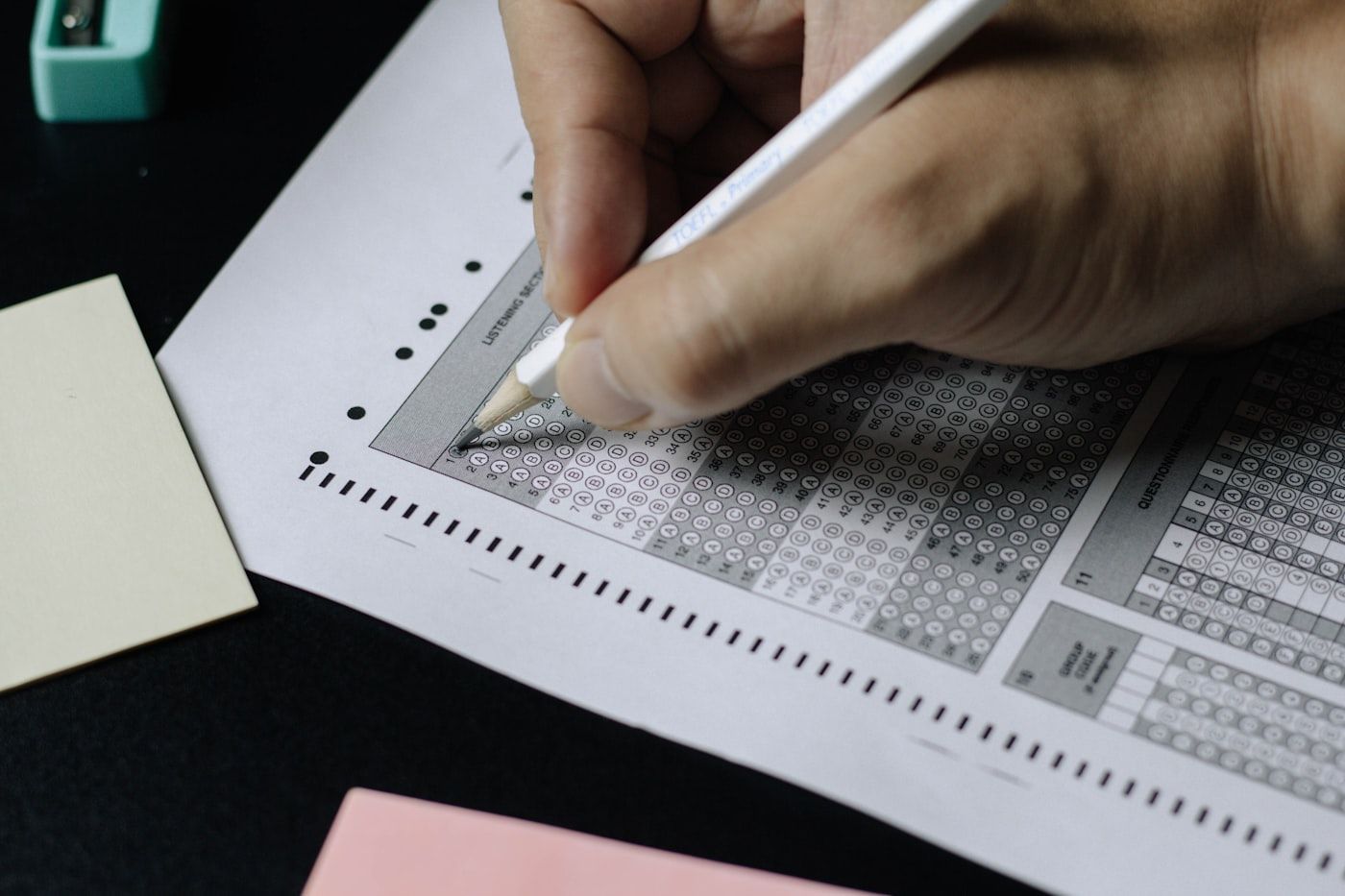
The DTZ — Deutsch-Test für Zuwanderer is the mandatory final exam of the German Integrationskurs. It takes approximately 3.5 hours, tests four language skills, and gives you either an A2 or B1 result. There is no pass or fail in the traditional sense — but B1 is what you need for permanent residency and citizenship.
This guide walks you through every detail: what the exam looks like, how scoring works, what B1 actually gets you, how to prepare, and what to do if things don’t go as planned.
The DTZ is a standardised German language exam developed jointly by telc GmbH and the Goethe-Institut on behalf of BAMF (Bundesamt für Migration und Flüchtlinge). It was introduced specifically for participants in the Integrationskurs and cannot be sat independently — you must complete the integration course first.
Key facts at a glance:
| Detail | Information |
|---|---|
| Full name | Deutsch-Test für Zuwanderer |
| Administered by | telc GmbH / Goethe-Institut |
| Commissioned by | BAMF |
| Levels tested | A2 and B1 (CEFR) |
| Duration | approx. 3.5 hours |
| Sections | Listening, Reading, Writing, Speaking |
| Result | A2 or B1 per skill area |
| Cost | Covered by Integrationskurs fee |
| Retake allowed | Yes, once free; after that, fee applies |
The DTZ is not a standalone exam you can book at any test centre. It is exclusively offered at the end of BAMF-approved Integrationskurs programmes. If you have not completed the course, you cannot sit the DTZ — instead, you would need to take a regular telc B1 or Goethe-Zertifikat B1.
Reaching B1 on the DTZ is not just about getting a certificate. It has direct legal consequences for your life in Germany.
With B1 (DTZ):
With A2:
If your goal is citizenship or a permanent settlement permit, B1 is the target. Everything below B1 means you need to continue.
The DTZ consists of four sections. Written sections come first; the speaking test is scheduled separately (same day or a different day, depending on the test centre).
You listen to recordings and answer questions. The recordings simulate real-life situations: announcements, phone messages, short conversations, radio clips.
Task types:
Each recording is played twice. You have time to read the questions before the audio starts. This is your most reliable section for gaining points if you train your ear beforehand.
Common pitfall: Many candidates lose concentration during the second playthrough and change correct answers. Trust your first instinct unless you clearly hear something different.
Reading is the longest written section. It is divided into two sub-parts:
Lesen (20 items): Short to medium-length texts — notices, ads, emails, newspaper extracts. Questions test comprehension and inference.
Sprachbausteine (grammar/vocabulary cloze, 10 items): A text with gaps; you choose the correct word or phrase from four options per gap. This tests grammar, vocabulary, and sentence cohesion simultaneously.
Time management tip: Allocate roughly 25 minutes for Lesen and 20 minutes for Sprachbausteine. If you get stuck on a question, mark it and move on. Every unanswered item is a guaranteed zero; a guess might be correct.
You write one semi-formal or formal letter or email in response to a prompt. Typical scenarios: applying for a document, responding to a neighbour’s complaint, requesting information from an authority, or writing to your landlord.
What the examiners look for:
Practical advice: Start with a greeting (Sehr geehrte Damen und Herren / Sehr geehrte Frau X), structure your letter in 3–4 short paragraphs, and close formally (Mit freundlichen Grüßen). Practice 10–15 different letter types before the exam.
The speaking test is conducted in pairs — you and one other candidate from your course. If the group has an odd number, one group of three is formed. The examiner observes but does not participate in the conversation.
Three tasks:
The speaking section is often candidates’ biggest anxiety point — but it is also where natural, fluent A1-level conversation can still earn B1 marks if you demonstrate interaction and communication strategies.
The DTZ uses a combined point system across the four sections. Each section is scored independently, but your final level (A2 or B1) is determined by your total points.
Score thresholds:
| Result | Required total points |
|---|---|
| B1 | 60 or more out of 100 |
| A2 | 30–59 out of 100 |
| Below A2 | Under 30 (rare) |
The 100-point scale breaks down roughly as follows:
You can achieve B1 in some sections and A2 in others — the certificate reports your level per skill area. However, your overall certificate level is determined by the total. A perfect speaking score cannot compensate for a very weak reading result if the total remains below 60.
This means: prioritise the written sections. Lesen alone is worth nearly half of all available points.
Both telc and BAMF publish free Modelltests — full practice exams with answer keys and audio files. These use the exact same format as the real exam. Complete at least two full tests under timed conditions before your exam date.
Search for: “telc Deutsch A2·B1 Modelltest” on the telc website (telc.net).
Thirty minutes of German audio every day is more effective than three hours once a week. Use:
Focus on understanding the main idea and key details — exactly what the Hören section tests.
Writing is the section where most candidates under-prepare. Choose a different scenario each day: a complaint letter, an appointment request, a query about a bill. After writing, compare your text against a model answer.
Key phrases to memorise:
Practice the speaking tasks with a classmate or language partner at least twice a week. Record yourselves and listen back. Pay attention to: Do you take turns? Do you ask follow-up questions? Do you react to what your partner says?
The cloze section tests specific grammar points repeatedly: two-way prepositions, connector words (weil, obwohl, trotzdem), verb tenses, and modal verbs. Create a one-page reference sheet and review it daily.
At least once, take the full exam in one sitting — Hören (25 min), Lesen (45 min), Schreiben (30 min) — without breaks. This builds the mental stamina required on exam day.
In Hören:
In Lesen:
In Schreiben:
In Sprechen:
What to bring:
Arrive 15–20 minutes early. Latecomers may be refused entry once the audio for Hören has started.
The written exam flow:
The speaking test is usually scheduled on the same day in the afternoon, or on a different day within the same examination period. You will be told your time slot in advance.
When do you get your results?
Results are typically communicated to your course provider within 4–6 weeks after the exam date. Your course provider will contact you and hand over your certificate.
What certificate do you receive?
You receive two separate documents:
Both documents are important. Keep originals and make certified copies.
If you reached B1:
If you reached A2:
Many candidates wonder whether the DTZ is “as good as” a regular B1 certificate. Here is a clear comparison:
| Exam | Institution | Purpose | Accepted for |
|---|---|---|---|
| DTZ B1 | telc / Goethe | Integrationskurs conclusion | Einbürgerung, Niederlassungserlaubnis, most employer requirements |
| Goethe-Zertifikat B1 | Goethe-Institut | General B1 proof | University, employer, visa, citizenship |
| telc Deutsch B1 | telc GmbH | General B1 proof | University, employer, visa, citizenship |
For German residency and citizenship purposes, the DTZ B1 is fully equivalent to any other B1 certificate. The Ausländerbehörde and Einbürgerungsbehörde accept it without question.
For university applications (e.g., TestDaF or DSH prerequisites), the DTZ alone may not suffice — check the specific institution’s requirements.
For employer requests, most German employers accept DTZ B1 as proof of language ability, especially in public sector and service industries.
If you need a B1 certificate for purposes beyond residency, you may want to additionally sit the Goethe or telc B1 exam. You can prepare for both simultaneously.
For more information on the full range of German language certificates, read our guide to Goethe certificates from A1 to C2.
The DTZ does not exist in isolation. It is the endpoint of a 700-hour learning journey, and the beginning of your independent life in Germany.
If you are still planning your Integrationskurs or wondering how to find a BAMF-approved provider near you, use our school search to find verified language schools in your city.
Wondering how long it actually takes to reach B1 from zero? Our guide on how long each German level takes from A1 to C2 gives you a realistic timeline.
Already completed the DTZ and thinking about what comes next — C1, TestDaF, or specialised German for work? Our guide on choosing between intensive, evening, and weekend German courses helps you pick the right format.
And if you want to understand the full Integrationskurs structure before sitting the DTZ, our complete integration course guide explains every step from enrolment to certificate.
1. Can I take the DTZ without completing the Integrationskurs?
No. The DTZ is exclusively administered as the final exam of the Integrationskurs. You must complete the course (or an approved equivalent) to be eligible. If you need B1 proof without the Integrationskurs, take a regular telc B1 or Goethe-Zertifikat B1 instead.
2. What happens if I miss the exam date?
If you have a documented reason (serious illness, family emergency), contact your course provider immediately. You may be able to reschedule within the same examination period. Without a valid reason, you forfeit your first free attempt.
3. How many times can I retake the DTZ?
You can retake once for free after completing an extension course (Aufbaukurs, 300 hours). Any further retake costs approximately €70–€130, depending on the test centre and provider.
4. Does the DTZ expire?
The DTZ certificate does not have a fixed expiry date. However, German authorities may request a more recent language proof if your certificate is several years old and your German does not demonstrate B1 in practice. For citizenship applications, most Einbürgerungsbehörden accept DTZ certificates regardless of age.
5. Can I use the DTZ for university admission?
The DTZ demonstrates B1 level, but most German universities require B2 or higher, and often a specific exam like DSH or TestDaF. Check the language requirements of the specific university and programme you are applying to.
6. What is the difference between the DTZ result and the Zertifikat Integrationskurs?
The DTZ is a language exam result issued by telc or Goethe-Institut. The Zertifikat Integrationskurs is an administrative certificate issued by BAMF confirming course completion. You need both for residency applications — the DTZ proves your language level, the BAMF certificate proves you attended the full programme.
7. I got B1 overall but A2 in speaking. Does that matter?
Your overall level (B1) is what appears on the main certificate and is used for official purposes. The skill-area breakdown is shown separately. For most immigration purposes, only the overall level matters. Some employers may look at the breakdown — but this is rare for standard job applications.
8. My course ends next month. When should I start exam preparation?
Start at least 4–6 weeks before the exam. Focus on Modelltests in weeks 1–2, targeted weak-area practice in weeks 3–4, and full timed simulations in the final two weeks. Do not cram the night before — a good night’s sleep is more valuable than last-minute vocabulary.
BAMF-certified Integrationskurs providers are available across Germany. Use our school search to filter by city, course type, and availability. Every school listed on sprachschule.org has been verified for quality and BAMF accreditation.
Your B1 is within reach. The DTZ rewards consistent preparation — not cramming, not luck. Start your Modelltest today.
language20+ students per class. Stuck at B1 for months. Teacher speaks English. No exam prep. No accreditation. If this sounds familiar, you're paying for nothing.
languageWeek-by-week plan from zero to B2 German in 26 weeks. Specific grammar topics, vocabulary targets, and daily schedule. 600 hours, no shortcuts.
 language
Failed your TestDaF, telc, Goethe, DSH, or DTZ exam? This guide covers retake rules, waiting periods, costs, alternative exams, and proven strategies to pass on your next attempt — practical advice for 2026.
Compare by level, format, price and city – and start your search now.