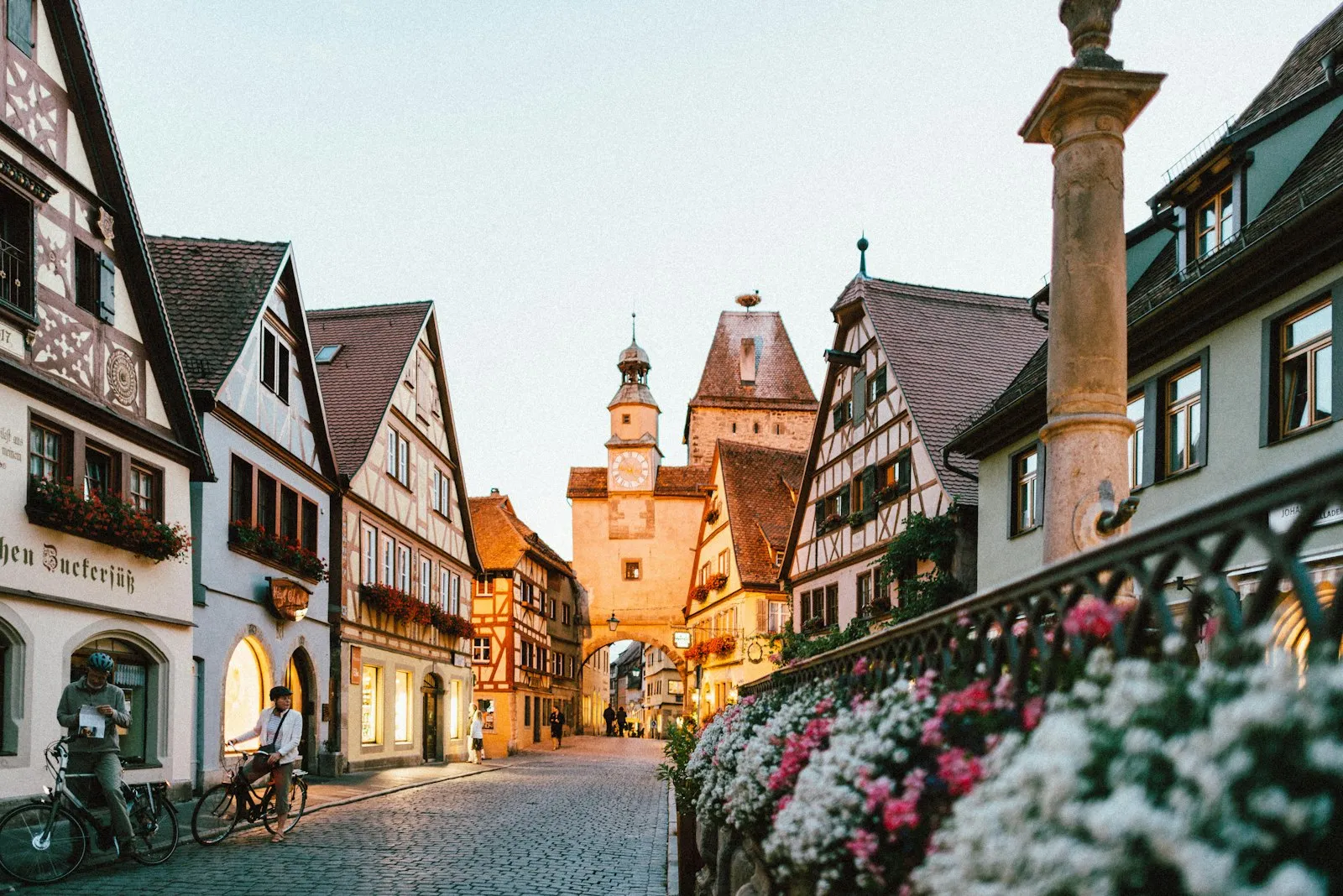
You land at Frankfurt, Munich, or Berlin airport. Everything looks efficient and orderly. The trains run on time. People queue politely. You think: this is going to be easy.
Then week two arrives. The supermarket is closed on Sunday. Your neighbour leaves a handwritten note because your music was 3 decibels too loud at 9 pm. You smile at a stranger on the bus and receive a blank stare in return. The bureaucracy at the Bürgeramt feels like a puzzle designed by someone who actively dislikes you.
Welcome to culture shock — one of the most normal, most misunderstood, and ultimately most rewarding experiences of studying or living abroad. This guide breaks down exactly what to expect, when to expect it, and how to move through it faster so you can start genuinely enjoying life in Germany.
The 4 Stages of Culture Shock
Psychologist Kalervo Oberg first described culture shock in 1960, and his four-stage model remains remarkably accurate for people arriving in Germany today.
Stage 1 — The Honeymoon (Weeks 1–4)
Everything is new and exciting. German bread is incredible. The public transport actually works. You take photos of the architecture. You feel adventurous. Even bureaucracy feels like a charming quirk. This stage is real, and it is wonderful — enjoy it fully.
Stage 2 — Frustration (Weeks 4–12)
The novelty fades and irritations accumulate. You miss your family’s cooking. German communication style feels abrupt. You cannot figure out how recycling bins work. The language barrier feels heavier than expected. You might feel lonely, irritable, or homesick. This is the hardest stage, and it is also completely normal. Almost every international student experiences it.
Stage 3 — Adjustment (Months 3–6)
You start building routines. You find your favourite bakery. You understand which bin to use for what. You start catching jokes in German. The things that frustrated you begin to make sense, even if you still disagree with them. You develop strategies for navigating the culture.
Stage 4 — Adaptation (Month 6 onwards)
You feel at home. Not because Germany has become identical to your home country, but because you have built a life here. You appreciate what Germany does well and have made peace with its quirks. You may even find yourself explaining German customs to newer arrivals.
Knowing these stages exist does not eliminate the discomfort of stage two — but it helps enormously to know that what you are feeling is a phase, not a permanent condition.
What Surprises International Students Most About Germany
Punctuality Is Not Optional
In many cultures, arriving 10–15 minutes late is perfectly acceptable and even polite. In Germany, being late is a sign of disrespect. For university lectures, appointments, job interviews, and social plans: arrive on time or a minute or two early. If you are running late, text ahead. Germans genuinely appreciate a heads-up, and they will respect you more for giving one.
Direct Communication
Germans are famously direct. If a colleague says your presentation needs improvement, they mean it needs improvement — they are not building up to a compliment. If a friend tells you they dislike something about your idea, they are treating you as an intellectual equal, not attacking you personally.
This directness can feel rude to people from cultures where criticism is softened or implied. Once you recalibrate your expectations, you will likely find German directness refreshing: you always know where you stand. When a German gives you a genuine compliment, you can trust it.
Ruhezeit: The Sacred Quiet Hours
Germany has legal and social quiet hours (Ruhezeit). The strictest apply from 10 pm to 7 am on weekdays and all day on Sundays and public holidays. No drilling, no loud music, no noisy parties during these windows. Many apartment buildings have additional rules. Your neighbours will knock, leave notes, or in extreme cases call the Hausmeister (building caretaker) or even the police.
This is not Germans being unfriendly. It reflects a genuine cultural value: everyone deserves peace and rest in their home. Respect Ruhezeit and your neighbours will likely become helpful and pleasant.
Sunday Is Really Closed
Most shops close on Sunday in Germany. Supermarkets, clothing stores, furniture shops — closed. Some petrol stations and shops at train stations and airports stay open, and restaurants and cafes operate normally. But if you are used to doing your weekend shopping on Sunday, you need to adjust. Do your grocery run on Saturday.
This initially frustrates almost every international student. Over time, many come to appreciate it: Sunday genuinely feels different, quieter, more spacious. Go for a walk, visit a museum, or invite friends over.
Germany Is Still Very Much a Cash Culture
Germany has been slower than most Western European countries to adopt cashless payments. Many smaller restaurants, bakeries, market stalls, and even some supermarkets still prefer or only accept cash. Always carry at least €20–30 in cash. Getting a German bank account quickly is important — read our guide to opening a bank account in Germany for the fastest options.
Recycling Is a Serious Business
Germany’s recycling system (Mülltrennung) has multiple bins and rules that vary slightly by city:
- Gelbe Tonne / Gelber Sack — yellow bin for packaging with recycling symbols (plastic, metal, composite packaging)
- Papiertonne — blue or grey bin for paper and cardboard
- Biotonne — brown bin for food scraps and organic waste
- Restmüll — grey or black bin for everything else
- Glass containers — taken to public glass collection points, separated by colour (white, green, brown)
- Pfand bottles — plastic and glass bottles with a Pfand (deposit) symbol go back to supermarket return machines for a refund of €0.08–0.25 each
Putting the wrong thing in the wrong bin can result in the collection service refusing to empty it. Ask your building’s Hausmeister or a German neighbour — they will be happy to explain.
Bureaucracy Requires Patience and Preparation
German bureaucracy is thorough. The Anmeldung (city registration) is required within 14 days of arrival and is the gateway to almost everything else: bank accounts, health insurance, mobile contracts. Appointments at the Bürgeramt (citizens’ office) can be booked weeks in advance.
Our complete guide to Anmeldung city registration walks you through every step. The key principle: gather all your documents before your appointment, arrive on time, and be patient.
Your First-Week Checklist
Getting practical things done quickly reduces stress enormously. Here is a realistic sequence:
Days 1–3:
- Register at your accommodation address (or arrange temporary address for Anmeldung)
- Get a German SIM card (Aldi Talk, Lidl Connect, O2 Free are popular with students)
- Find your nearest supermarket, pharmacy, and doctor
- Download DB Navigator (trains), Google Maps offline, and your city’s public transport app
- Locate the nearest Bürgeramt and book an Anmeldung appointment
Days 4–7:
- Complete Anmeldung (bring passport, rental contract, Wohnungsgeberbestätigung form from landlord)
- Open a bank account (N26 and DKB work well for international students)
- Obtain health insurance (students under 30 can use public student health insurance via TK, DAK, or AOK)
- Register at your university’s international student office
- Find out where your language school or university campus is — do a trial run before the first day
Week 2:
- Explore your neighbourhood on foot
- Join at least one social activity
- Cook one proper meal rather than eating out every day
- Video-call home — but also set a limit so you stay present in Germany
For housing support during this early period, see our housing guide for language students in Germany.
Making Friends in Germany: It Takes Longer, But It Is Worth It
One of the most common complaints from international students is that Germans seem cold or unfriendly. This is a misunderstanding of German social norms, not an accurate description of German people.
Germans tend to have smaller, deeper social circles rather than large networks of casual acquaintances. The transition from acquaintance to friend is slower — but once you are in someone’s inner circle, that friendship is genuinely solid.
Where to Meet People
Your language school or university: The most natural starting point. Other international students are in the same situation you are. Search for German language schools near you to find the right fit and connect from day one.
Stammtisch: A regular informal gathering at a pub or cafe, usually organised around a shared interest. Search “[your city] Stammtisch Expats” or “[your city] internationaler Stammtisch” — there are usually several options.
Tandem partnerships: Language exchange where you practice German with a native speaker who wants to practise your language. Universities often organise these. Apps like Tandem and HelloTalk also connect you with local speakers.
Sport clubs (Vereine): Germany has a remarkable density of sport clubs for every imaginable sport. Many run beginner sessions, have multilingual members, and are inexpensive to join. Joining a Verein is one of the fastest ways to meet Germans in a relaxed, recurring context.
Volunteer work: Volunteering at local organisations puts you in regular contact with locals who are motivated by shared values.
Online communities: Facebook groups like “Expats in [City]”, Meetup.com events, and city-specific Reddit communities are active and welcoming.
German Social Etiquette Tips
- Use formal address (Sie) with adults you have just met, especially in professional contexts. Switch to du only when invited to.
- Bring something when invited to someone’s home — wine, flowers, or chocolates. Never arrive empty-handed.
- Germans value privacy highly. Do not ask personal questions (salary, age, relationship status) too early in a friendship.
Homesickness: Real, Normal, and Manageable
Missing home is not weakness. It is a sign that you have meaningful connections and a life worth missing. Almost everyone studying abroad experiences homesickness at some point, typically peaking around weeks 6–10.
Create familiar rituals. Cook a dish from home once a week. Watch a TV show from your home country on Sunday evenings. These small anchors of familiarity reduce the cognitive load of constant adjustment.
Stay connected in moderation. Regular calls with family and friends at home are healthy. But if every evening is spent on video calls with people thousands of kilometres away, it becomes harder to invest in building a new life in Germany.
Mark small wins. Successfully navigating the recycling system, understanding a full conversation in German, finding the best Döner in your neighbourhood — celebrate these. They are genuine achievements.
Get outside. German cities and countryside are genuinely beautiful. Going for walks, cycling, or visiting parks shifts your mood more reliably than most things.
Give it time. The frustration stage of culture shock does end. Most people who push through it describe their time in Germany as one of the most formative experiences of their lives.
Understanding German Humour
German humour has an unfair reputation for being non-existent. It exists — it is just different.
German humour tends to be dry, ironic, and often deadpan. Germans frequently say absurd things with a completely straight face, then wait to see if you catch the joke. Wordplay (Wortspiele) is popular and appears frequently in advertising and everyday conversation. Self-deprecating humour is common.
If a German makes a joke at your expense in a friendly context, they probably like you. Responding with equal wit is perfectly appropriate.
Food Culture Differences
Germany’s food culture may differ significantly from yours.
Breakfast is taken seriously. A traditional German breakfast (Frühstück) features bread, cold cuts, cheese, yoghurt, and eggs. Many cafes offer elaborate breakfast menus served until midday or beyond.
Lunch was historically the main meal. Many traditional restaurants offer a Mittagstisch (lunchtime menu) with a hot two-course meal at a significantly reduced price. Excellent value.
Dinner (Abendbrot) is often cold. The classic German evening meal is bread with cold toppings — Aufschnitt (cold cuts), cheese, pickles. If you are invited to a German home for Abendbrot and expect a cooked meal, you may be surprised.
German bread deserves its reputation. With over 3,200 registered bread varieties, German bread is genuinely world-class. Your neighbourhood bakery (Bäckerei) is worth finding early.
Vegetarian and vegan options have expanded dramatically in German cities over the past decade. Most cities have dedicated vegetarian/vegan restaurants, and supermarkets like Edeka, Rewe, and especially Aldi and Lidl now carry good plant-based ranges.
The university Mensa (canteen) offers subsidised meals, typically €2–4 for students. It is one of the best value-for-money options available to you.
Weather Reality Check
Germany’s climate varies significantly by region, but some generalisations apply.
Winters are grey and cold. From November to February, overcast skies are the norm in most of Germany. Temperatures range from around -5°C to 8°C. The lack of sunlight affects mood, and Seasonal Affective Disorder (SAD) is genuinely prevalent among people who come from sunnier climates.
Combat the grey: get outside even when it is overcast, invest in good winter clothing, use a daylight lamp, exercise regularly, and stay socially active.
Summers are warm and beautiful. June to August brings long days, temperatures of 20–30°C, and outdoor life in full swing. Beer gardens (Biergärten), lakes, cycling paths — Germany in summer is genuinely wonderful.
Dress in layers. Weather changes within a single day are common. The German phrase “Es gibt kein schlechtes Wetter, nur schlechte Kleidung” (There is no bad weather, only bad clothing) is genuinely lived by locals.
For understanding living costs across different German cities, our cost of living comparison across 15 German cities has detailed regional breakdowns.
When to Seek Help
Culture shock can occasionally tip into something that requires professional support. If you experience persistent low mood lasting more than a few weeks, difficulty functioning in daily life, or significant anxiety, please reach out:
University counselling services: Almost every German university has a free psychological counselling service (Psychologische Beratungsstelle). These are confidential and available to enrolled students.
Telefonseelsorge: Germany’s crisis helpline, available 24/7 at 0800 111 0 111 (free, anonymous).
Online therapy: Platforms like Instahelp and HelloBetter offer therapy in multiple languages.
There is no shame in needing support. Adapting to a new country is one of the more significant challenges a person can undertake.
Frequently Asked Questions
How long does culture shock last in Germany?
The acute frustration phase typically lasts between 1 and 3 months. Most international students begin to feel genuinely settled by month 4–6. Language acquisition is the single biggest accelerator — the better your German, the faster you integrate.
Is culture shock worse in Germany than in other countries?
Germany has a reputation for a steeper culture shock curve than some other Western European destinations, primarily because of directness, formality, and rule-following culture. That said, once past the frustration phase, many international students report deeper integration and more genuine friendships than in countries with superficially warmer but shallower social cultures.
Do I need to speak German to make friends?
In major cities and universities, you can get by with English in many social contexts. But learning German — even at a basic level — dramatically accelerates social integration. Germans appreciate effort enormously. Even broken German spoken with confidence opens more doors than perfect English.
What is the biggest mistake international students make?
Staying exclusively within their own national community. It is comfortable and understandable, but it slows integration significantly. Push yourself to join at least one activity where Germans are present, even if it is uncomfortable at first.
How do I handle German directness without feeling attacked?
Recognise that directness is culturally neutral in Germany — it is not emotional, it is informational. When someone criticises your work directly, breathe, thank them for the feedback, and respond to the substance. Over time, you may find yourself appreciating the clarity.
Are Germans actually unfriendly?
No. Germans are generally private, reserved, and slow to warm up — but not unfriendly. The difference matters. Once you have spent enough time with someone to enter their inner circle, you will find them loyal, reliable, and genuinely warm. Adjust your timeline expectations.
Is the cash culture really that prevalent?
Yes, though it varies by city and context. Berlin and Hamburg are more cash-heavy than Munich or Frankfurt. Always have €20–30 on you. Many excellent restaurants, market stalls, and smaller shops are cash-only.
What should I do if I feel severely homesick?
Reach out to your university’s international student office or psychological counselling service. Connect with other international students who are going through the same thing. Set a regular call schedule with home rather than constant ad-hoc contact, which can actually intensify homesickness.
Related Articles
Ready to Start Your Journey in Germany?
Finding the right language school makes the transition much smoother — a good school gives you language skills, a social network, and local knowledge from day one.
Search language schools across Germany →

 language-school